Discover in-depth articles on structural design, luxury finishes, sustainable materials, and practical packaging solutions for modern brands.
Luxury chocolate rigid boxes are becoming strategic assets for premium confectionery brands in 2026. They protect delicate pralines, shape shelf presence, and influence the unboxing experience. Global buyers now compare more than appearance. They examine board strength, food-contact safety, humidity resistance, insert accuracy, and transport efficiency.
Packaging analyst David Luttenberger once said, “Packaging is the last five seconds of a marketing campaign.” That observation remains highly relevant to chocolate packaging. A magnetic-closure box can create a dramatic opening moment. A drawer-style box offers controlled presentation and smooth movement. Shoulder-neck designs communicate heritage, while book-style boxes suit curated collections and seasonal assortments. Sleeved rigid boxes may reduce visual complexity and support faster branding changes.
This guide reviews the top luxury chocolate rigid boxes for international buyers. It considers structure, materials, finishing methods, customization, and practical production risks. Soft-touch lamination feels elegant, but it can show fingerprints. Foil stamping catches light, yet excessive coverage may weaken a refined design. Magnetic systems feel premium, but added weight can raise freight costs. There is no perfect box.
That is worth remembering.
Experienced buyers should request prototypes before confirming large orders. They should inspect corner alignment, cavity fit, closure strength, and color consistency under different lighting. Recycled paperboard, molded-pulp inserts, and plastic-reduction strategies also deserve attention. However, sustainability claims require evidence, not attractive wording. Suppliers should provide material details, testing records, and clear quality controls. The strongest luxury chocolate rigid boxes balance beauty, protection, brand storytelling, and responsible production without sacrificing practical performance.
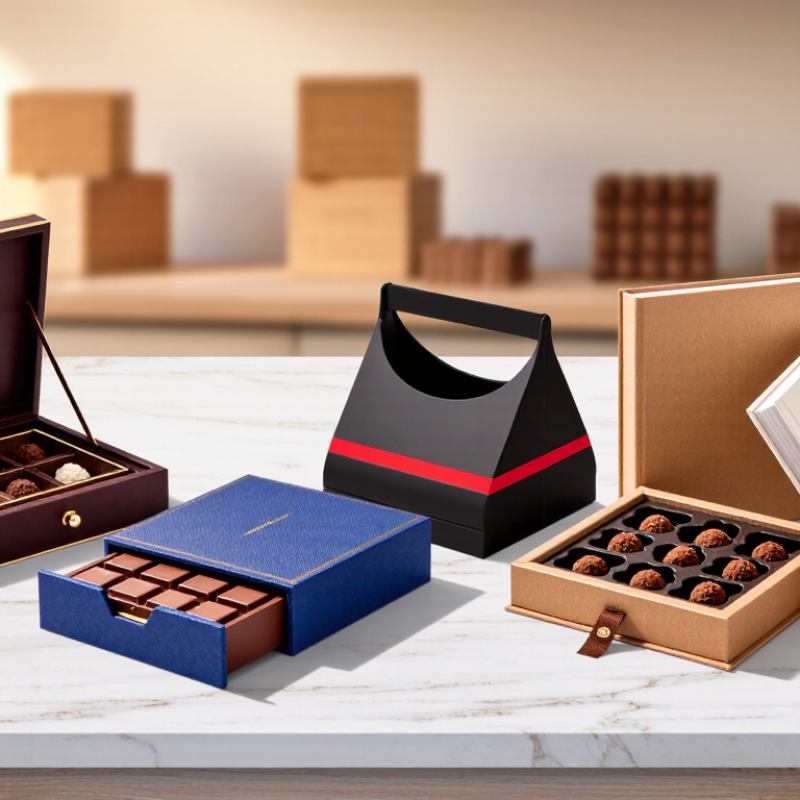
2026 Top Luxury Chocolate Rigid Box Types for Global Buyers
According to Grand View Research, the luxury packaging market is projected to grow at a 5.4% CAGR through 2030. This forecast reflects stronger demand for premium presentation, gifting, and memorable unboxing experiences. For chocolate buyers, rigid boxes offer structure, protection, and a more refined shelf presence.
Five formats deserve attention in 2026. Magnetic-closure boxes create a clean, reusable opening experience. Drawer-style boxes suit layered assortments and controlled portion presentation. Book-style boxes support storytelling through printed interiors and textured covers. Lift-off lid boxes remain practical for stacked pralines and seasonal collections. Modular boxes allow inserts to change without replacing the entire outer case.
Materials still require careful testing. A thick paperboard shell can feel substantial, but excessive weight may increase freight costs. Soft-touch lamination looks elegant, yet it can show fingerprints and scuff during handling. Embossed details improve tactile appeal, although fine patterns may lose clarity on recycled surfaces. Small design choices matter.
Chocolate packaging should also consider temperature, humidity, and internal movement. Food-safe liners, secure cavities, and accurate dimensions reduce damage during international shipping. Recyclable paper components can support sustainability goals, but mixed materials may complicate disposal in different markets. This point is often underestimated.
Reliable suppliers should provide material specifications, sample testing, compression checks, and clear production tolerances. Buyers should also verify local packaging and food-contact requirements before approval. A beautiful prototype is not enough. Performance must survive the warehouse, the journey, and the customer’s hands.
Indexed market outlook for global buyers, with 2026 set at 100 and a 5.4% annual growth rate through 2030.
The index is calculated from the stated 5.4% CAGR: 2026 = 100, followed by compound annual growth through 2030. It represents market expansion rather than absolute revenue or company-level performance.
Magnetic book boxes give assorted chocolate SKUs a controlled, premium presentation. The hinged cover opens like a small archive, revealing neat cavities, tasting cards, and layered inserts. A concealed magnet creates a quiet closing action. That detail feels expensive.
Smithers’ The Future of Luxury Packaging to 2028 identifies premium presentation and material efficiency as important luxury packaging priorities. For chocolate exporters, rigid board around 1,200gsm can improve stacking strength and reduce panel flexing. However, thickness alone does not prove quality. The wrapped paper must resist scuffing, while inserts should hold each chocolate firmly during shipment. A loose praline can damage the entire opening experience.
Assorted collections benefit from removable trays and clear SKU mapping. Buyers can separate dark, milk, nut-free, or seasonal selections without rebuilding the box. Food-contact barriers, adhesive selection, and migration testing require documented supplier control. Regional packaging rules also need checking before production. According to McKinsey’s 2023 packaging survey, 60–70% of consumers value sustainable packaging features, depending on the market. A magnetic closure can support reuse, but it may complicate material separation. That weakness deserves attention. Recycled paper, smaller magnets, and replaceable trays can improve the design, although they may increase development time. Procurement teams should request compression tests, humidity tests, and opening-cycle samples before approving large quantities. Fancy is not enough.
| Magnetic Book Box Type | Typical Chocolate Capacity | Recommended Internal Size (L × W × H, mm) |
Typical External Size (L × W × H, mm) |
Rigid Board Structure | Insert Configuration | Typical Closure Specification | Best Use for Assorted SKUs | Indicative Empty Box Weight |
|---|---|---|---|---|---|---|---|---|
| Mini Presentation Book Box | 2–4 chocolates | 100 × 70 × 32 | 108 × 78 × 40 | 1.5–2.0 mm greyboard with 120–157 gsm wrapped paper | Die-cut paperboard or molded pulp insert; individual cavities | 1 concealed magnetic pair; approximately 0.5–1.0 kg holding force per magnet | Pralines, tasting selections, welcome gifts and small seasonal assortments | Approximately 90–150 g |
| Compact 6-Piece Book Box | 6 chocolates | 145 × 100 × 35 | 153 × 108 × 43 | 1.5–2.0 mm rigid board with coated or textured paper wrap | 6-cell insert with a removable presentation tray | 1–2 concealed magnetic pairs; flush-fitting book-style cover | One flavor collection or six individual chocolate SKUs | Approximately 160–240 g |
| Classic 9-Piece Book Box | 9 chocolates | 185 × 135 × 38 | 193 × 143 × 46 | 1.8–2.0 mm rigid board; optional laminated or specialty paper surface | 3 × 3 cavity insert; removable or lift-out tray | 2 concealed magnetic pairs for improved lid alignment | Balanced assortment of dark, milk and white chocolate varieties | Approximately 260–380 g |
| Standard 12-Piece Book Box | 12 chocolates | 220 × 160 × 40 | 228 × 168 × 48 | 2.0 mm rigid board; wrapped in art paper, textured paper or fabric-look paper | 3 × 4 or 4 × 3 cavity insert with anti-scuff dividers | 2 concealed magnetic pairs; reinforced spine recommended | Core retail gift set with multiple flavors, fillings or origins | Approximately 380–520 g |
| Large 16-Piece Book Box | 16 chocolates | 260 × 190 × 42 | 268 × 198 × 50 | 2.0–2.5 mm rigid board for improved panel stability | 4 × 4 cavity insert; removable tray with separator grid | 2–3 concealed magnetic pairs; reinforced hinge and spine construction | Premium mixed assortment with four or more flavor categories | Approximately 560–760 g |
| Grand 24-Piece Book Box | 24 chocolates | 320 × 235 × 45 | 330 × 243 × 53 | 2.0–2.5 mm rigid board; double-layered base recommended for heavier loads | 4 × 6 or 6 × 4 cavity insert; lift-out tray with rigid dividers | 3 concealed magnetic pairs; additional edge reinforcement advised | Corporate gifting, luxury hampers and broad multi-SKU collections | Approximately 850–1,150 g |
| Two-Tier Magnetic Book Box | 18–32 chocolates | 280 × 210 × 80 | 290 × 220 × 88 | 2.0–2.5 mm rigid board with internal support walls between tiers | Two removable trays; separate cavities for different chocolate formats | 3 concealed magnetic pairs; internal stop blocks for transport stability | Layered tasting journeys, premium collections and mixed-size chocolates | Approximately 950–1,400 g |
| Windowed Magnetic Book Box | 6–16 chocolates | 145–260 × 100–190 × 35–42 | 153–268 × 108–198 × 43–50 | 1.8–2.5 mm rigid board with paper-wrapped exterior | Custom cavity insert aligned beneath a clear PET or cellulose-acetate window | 1–3 concealed magnetic pairs, depending on box size | Visual merchandising where chocolate colors, decoration or shapes drive selection | Approximately 220–760 g |
| Drawer-and-Book Hybrid Box | 12–24 chocolates | 220–320 × 160–235 × 50–75 | 228–330 × 168–243 × 58–83 | 2.0–2.5 mm rigid board with a separate drawer shell and book-style cover | Removable drawer tray with 12, 16 or 24 individual cavities | 2–3 concealed magnetic pairs; ribbon pull recommended for the drawer | Reusable gift packaging, premium discovery sets and multi-stage unboxing | Approximately 700–1,300 g |
Specification note: Dimensions and weights are typical packaging-development ranges for rigid magnetic book boxes. Final measurements should be adjusted to the chocolate piece size, wrapper or foil thickness, insert material, food-contact requirements, shipping method and required protection level. Internal dimensions should normally allow clearance for the product and insert without compressing the chocolate packaging.
In 2026, drawer-style rigid boxes are gaining attention among luxury chocolate buyers. Their sliding structure creates a deliberate opening experience. It also supports modular compartments for multi-piece collections. Each drawer can hold pralines, truffles, bars, or tasting notes separately. This arrangement reduces movement during transport and keeps flavors visually distinct.
In practical packaging reviews, compartment accuracy matters more than decoration. A 12-piece collection may need three removable trays, each holding four chocolates. Food-grade paperboard, secure inserts, and smooth drawer rails help protect delicate surfaces. The outer box should resist compression, while the inner cavities should avoid excessive pressure. Packaging engineers often test the box through repeated opening, stacking, and vibration conditions. Humidity testing is also important for international shipments, especially in warm climates. Small gaps can affect presentation.
A drawer can feel premium, but it is not automatically efficient. Deep compartments may waste material or make smaller chocolates look insignificant. I have seen beautiful prototypes that were difficult to refill quickly. That weakness deserves attention. Buyers should request assembly samples, dimensional drawings, material specifications, and applicable food-contact documentation. They should also check whether the drawer remains aligned after several uses. A well-designed modular box balances tactile appeal, protection, production consistency, and practical handling. Its luxury comes from control, not excess.
Lift-off lid boxes remain a practical choice for luxury chocolate gift sets in 2026. Their separate lid creates a quiet opening moment and protects carefully arranged pieces. The structure scales well from six-piece assortments to larger seasonal collections. Experienced packaging teams usually begin with board thickness, product weight, and cavity layout. A rigid setup box often uses dense greyboard between 1.5 and 2.5 millimetres thick. The final choice depends on box dimensions and stacking pressure. Small details matter.
A removable insert can hold truffles, bars, or folded tasting cards securely. Velvet-touch paper, textured stock, and precise edge wrapping add tactile value without excessive decoration. For global buyers, flatness and consistent lid fit deserve early testing. Temperature changes during shipping may affect paper tension and board movement. A lid that fits perfectly in a showroom may feel tight after transit. This is easy to underestimate. Drop tests, compression tests, and humidity checks should support production approval. Magnetic closures can improve alignment, but they add cost, weight, and assembly steps. A simple lift-off lid may be more efficient for large orders. However, overly loose lids can reduce perceived quality and allow movement inside the carton. Prototypes should be opened repeatedly by real users, not only inspected on a worktable. Small flaws often appear there. Suppliers should also confirm material specifications, food-contact separation, print consistency, and replacement-part availability before scaling production.
Sustainable box design is becoming a purchasing requirement, not a decorative extra. By 2030, packaging sold in the EU is expected to meet stricter recyclability standards under evolving packaging rules. Luxury chocolate boxes should therefore use compatible paperboard structures, limited coatings, and easily separable components.
A rigid box with a paper sleeve, molded fiber tray, and water-based coating can support this direction. Metallic foil and laminated films still create recycling challenges. They look premium, but they may weaken material recovery.
FSC certification adds a clearer sourcing signal. Buyers should request valid FSC documentation and confirm chain-of-custody details with suppliers. This helps verify that paper materials come from responsible sources. It also improves purchasing records and customer communication. However, FSC certification does not automatically make a box recyclable. That distinction is often missed. Design, adhesives, inks, and inserts must still be reviewed together. EU requirements can also develop through technical guidance and national enforcement, so legal checks remain necessary.
Tips: Ask for a material breakdown before approving samples. Test the box after removing ribbons, magnets, and plastic windows. Request recyclability evidence for the finished structure, not only the paperboard. Keep decoration restrained. A soft-touch coating may feel luxurious, yet it can complicate recycling. Some designs will need compromise. That is not failure; it is better than discovering the problem after mass production.
Its hinged cover opens like a small archive. Removable trays can separate dark, milk, nut-free, and seasonal pieces. A concealed magnet creates a quiet closing action. The design feels premium, but function matters more.
Rigid board around 1,200gsm can reduce panel flexing. It may also improve stacking strength during transport. Thickness alone does not prove quality. Test the finished box.
Inserts should hold each chocolate firmly without squeezing it. Loose pralines can scratch surfaces and damage the presentation. Cavities should match each piece closely. Small gaps matter.
Request compression, humidity, vibration, and opening-cycle tests. Assembly samples and dimensional drawings can reveal practical problems. Check whether trays remain aligned after repeated use. Fancy prototypes can still fail.
Each drawer can hold pralines, truffles, bars, or tasting notes separately. Three trays may hold four chocolates each in a twelve-piece collection. This structure reduces movement and keeps flavors visually distinct. Deep drawers may waste material.
Use compatible paperboard, limited coatings, and easily separable components. Molded fiber trays and water-based coatings may support recycling goals. Metallic foil and laminated films can complicate material recovery. Less decoration may work better.
No. It mainly supports responsible paper sourcing and purchasing records. Recyclability also depends on adhesives, inks, coatings, magnets, and inserts. Request evidence for the complete box structure. Paper alone is not enough.
Review food-contact barriers, adhesive selection, and migration testing documents. Humidity testing is important for warm climates. Check regional packaging rules before production. Legal requirements can change.
A magnetic closure may encourage repeated opening and reuse. However, magnets can complicate material separation during recycling. Smaller magnets or replaceable trays may help. The compromise is real.
The luxury packaging market is expected to grow at a 5.4% CAGR through 2030, reflecting rising demand for elegant, functional, and environmentally responsible presentation. Among the most versatile solutions, luxury chocolate rigid boxes offer a premium unboxing experience while protecting delicate products. Magnetic book boxes create a refined, book-like opening and are ideal for assorted chocolate SKUs, seasonal collections, and carefully arranged presentations.
Drawer-style rigid boxes provide modular compartments that organize multi-piece collections and support flexible product configurations. Lift-off lid boxes offer a timeless structure that can be scaled for luxury chocolate gift sets of different sizes, making them suitable for both compact assortments and larger presentations. Sustainability is also becoming essential: designers are increasingly focusing on recyclable materials, simplified constructions, and FSC-certified paperboard. By combining structural sophistication, customization, product protection, and responsible material choices, these box types can meet the evolving expectations of global luxury chocolate buyers through 2030.