Industry Knowledge & Insights

Packaging Insights & Expert Guides

Discover in-depth articles on structural design, luxury finishes, sustainable materials, and practical packaging solutions for modern brands.

0%

Choosing custom bra packaging boxes in China is not simply a matter of finding the lowest unit price. The box must protect delicate fabrics, present the brand clearly, and arrive with consistent color and construction. Industry research helps explain why these details matter. McKinsey & Company’s 2023 consumer survey, covering 11 countries, found that shoppers’ sustainability priorities vary by market, while environmental impact remains part of product choice. For lingerie brands, that makes material claims worth checking carefully. Recycled content, paper weight, and coatings should be verified with supplier documentation, not assumed from a product photo.

Start with the actual garment and shipping journey. A molded cup can be crushed by a snug mailer; a satin set may snag on a rough insert. Request a physical sample, then test the box with your own product. Smithers’ packaging forecasts discuss the industry’s ongoing focus on material efficiency and changing packaging needs. These trends are useful context, but they cannot replace practical testing. Not quite.

When comparing Chinese suppliers, ask for itemized quotes covering board grade, dimensions, printing, inserts, finishing, and shipping terms. Confirm whether sample costs, tooling, and color adjustments are included. Request recent production photos and written quality tolerances, then compare the delivered sample with the approved artwork. A low quote can hide thin board or inconsistent finishes. It happens.

This guide explains how to evaluate suppliers, materials, customization, samples, and quality control before ordering custom bra packaging boxes. The right choice is not always the most elaborate one. It is the box that protects the product, suits the brand, and performs reliably at the agreed cost.
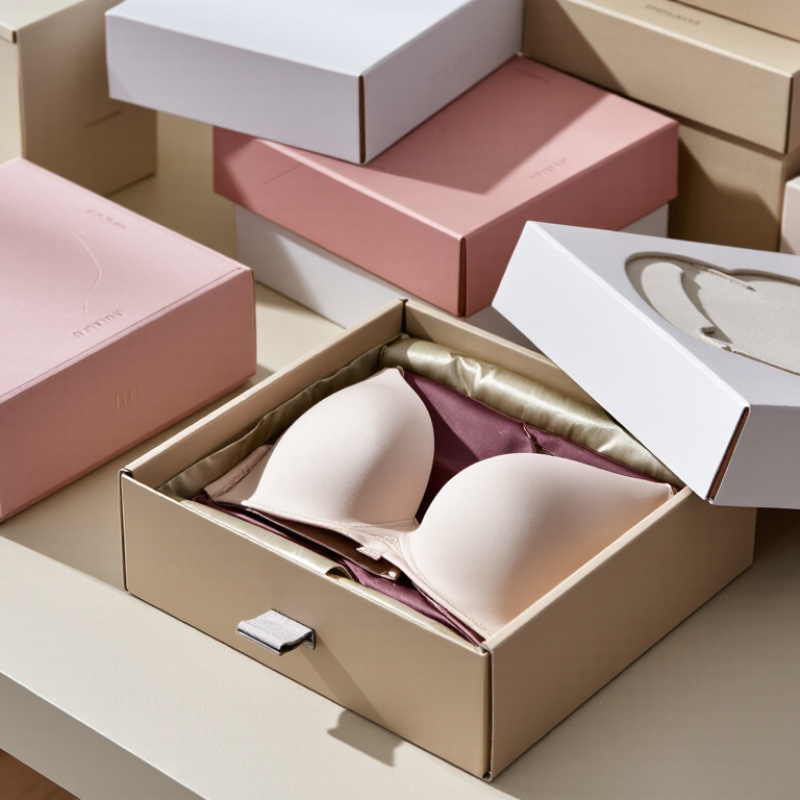
How to Find the Best Custom Bra Packaging Boxes in China?

Define Your Bra Packaging Requirements and Order Specifications

Before contacting a packaging supplier in China, define what the box must protect and how customers will use it. Measure the bra when folded, including molded cups, straps, and any tissue wrap. A rigid cup may need more depth than a soft bralette. Small differences matter. Record the inside dimensions, preferred box style, closure, and whether an insert is needed to prevent shifting.

Choose materials based on the product and presentation, not appearance alone. Specify paperboard thickness or material grade, surface finish, print colors, and any details such as a ribbon pull or embossed logo. If the packaging should feel discreet, state whether the outer carton must avoid product imagery. I have seen teams focus on color before checking fit; that choice can lead to an attractive box that still crushes a cup. I still find this easy to underestimate.

Put order details in writing: quantity, size variations, sample requirements, packing method, and delivery destination. Ask for a pre-production sample using the intended materials and print, then check fit, edges, color, and closure by hand. Set acceptable size and print tolerances with the supplier before production. Be specific. One detail I would revisit is whether every bra style truly needs a separate box size; extra variants can complicate storage and ordering.

Research Custom Bra Box Manufacturers and Sourcing Regions in China

When researching custom bra box manufacturers in China, compare their production experience, material options, and sampling process. Ask for a recent sample made with your actual dimensions, paper weight, and finish. Check whether the lid closes evenly and whether the inner insert holds a bra without crushing its shape. Small details matter. Request written specifications for board thickness, printing, color matching, and packing method, so quotations are easier to compare.

Guangdong, including areas around Shenzhen, Dongguan, and Guangzhou, has many packaging and printing suppliers. Zhejiang and Jiangsu also have established manufacturing bases and may offer different cost or transport advantages. Treat these regions as starting points, not guarantees of quality. A supplier’s location alone cannot confirm its equipment, capacity, or quality controls. If possible, visit the facility or arrange a live video tour. Look for printing and cutting equipment, organized sample storage, and clear inspection steps.

Ask whether the factory produces boxes in-house or outsources processes such as lamination or die-cutting. Outsourcing is not automatically a problem, but it can affect lead times and consistency. A very low quote may exclude inserts, protective wrapping, or shipping cartons. That is easy to miss. Compare the full specification and request a pre-production sample before placing a larger order. Even a good sample can hide uneven results across a full run, so agree on acceptable tolerances and defect checks in writing.

Compare Box Materials, Structures, Printing, and Customization Options

When sourcing custom bra packaging boxes in China, compare protection before appearance. Folding paperboard suits lightweight retail packs; rigid board adds structure but increases bulk and shipping weight. Corrugated mailers protect multi-item orders in transit. For shaped cups, ask suppliers to test a paper insert or tissue wrap that prevents crushing without wasting space. Feel the difference.

Material claims need context. The U.S. Environmental Protection Agency’s 2018 Advancing Sustainable Materials Management report recorded an 80.9% recycling rate for paper and paperboard containers and packaging. That is a U.S. benchmark, not a promise that every coated or laminated box will be recycled locally. Ask for the exact paper grade, coating details, and any material certificates. A neat sample can hide weak corners.

Structure and print choices affect cost and usability. Compare tuck-end, drawer, and two-piece boxes using the same bra size; check whether cups shift after repeated opening. Offset printing can suit larger runs, while digital proofs help review small orders and color. Request a physical proof, then inspect logo alignment, fine text, foil adhesion, and scuffing under ordinary handling. One detail often gets missed: dark ink may look different on kraft stock. Ask the factory to confirm board thickness, finished dimensions, packing method, and sample approval terms in writing.

How to Find the Best Custom Bra Packaging Boxes in China?

Compare common box structures by typical board or flute thickness.

Folding cartons are generally lightweight, while corrugated and rigid-board structures offer more thickness. These are typical industry ranges, not fixed specifications; actual thickness varies by supplier and material grade. Printing options such as offset, flexographic, and digital printing—and finishes such as lamination or foil stamping—depend on the chosen material and order requirements.

Verify Supplier Credentials, Product Quality, and Sample Accuracy

How to Find the Best Custom Bra Packaging Boxes in China?

Verify supplier credentials before discussing large orders. Ask for current business registration details, factory information, and examples of similar packaging work. A video call can help confirm that the production site and equipment match the supplier’s description. Paperwork matters. Still, documents alone cannot show how a box feels or performs.

Inspect the materials and construction closely. Check board thickness, print clarity, edge folding, glue lines, and whether the lid closes evenly. For bra packaging, confirm that the box protects delicate fabric without crushing cups or straps. Ask how the supplier checks dimensions and color during production. A neat showroom sample may not represent every production run.

Sample accuracy deserves special attention. Send a clear specification sheet with box dimensions, material, finish, artwork, and insert details. Request a preproduction sample made with the intended materials, not a quick mock-up. Compare it with your approved file under natural light, and test the fit using the actual folded garment. Keep a signed or photographed reference sample. Even then, small color differences can occur between screens and printed paper. Discuss acceptable tolerances in writing, and ask how defects are recorded and corrected. A rushed approval can create avoidable rework; buyers sometimes overlook this when deadlines feel tight.

Assess Pricing, Minimum Orders, Lead Times, and Shipping Terms

How to Find the Best Custom Bra Packaging Boxes in China?

Compare quotes line by line, not just by unit price. Ask whether the price includes printing plates, inserts, sample fees, and delivery to your address. A rigid box with a satin insert may cost more than a folding carton, but it can protect shaped cups better. Request prices at several quantities, such as 500, 1,000, and 3,000 boxes. Minimum orders vary by material and print method. Confirm the exact size, paper weight, finish, and color before comparing suppliers.

Lead times need clear milestones. Ask how long sampling, production, and packing each take, and when the clock starts. A sample may arrive quickly while bulk production takes several weeks. Allow extra time for revisions; small color differences can be surprisingly stubborn. For shipping, clarify whether the quote covers port delivery or transport to your warehouse. Confirm carton dimensions, gross weight, freight method, insurance, and who handles import charges. Get these terms in writing.

Tips: Approve a physical sample before mass production. Check the box with an actual bra inside, including tissue or other inserts. Ask for recent production photos and a dated schedule. Leave a buffer before a launch; estimates are not guarantees, and I would not plan around the most optimistic date.

FAQS

Which regions in China are common starting points for custom bra box sourcing?

Guangdong, including areas near Shenzhen, Dongguan, and Guangzhou, has many packaging suppliers. Zhejiang and Jiangsu are also established manufacturing regions. Location alone does not guarantee quality.

How can I check whether a supplier is credible?

Request current business registration details, factory information, and examples of similar packaging. A live video tour can help confirm the site and equipment. Paperwork matters, but it cannot show how a box feels.

What should I inspect on a bra box sample?

Check board thickness, print clarity, folded edges, glue lines, and lid alignment. Place an actual folded bra inside. Make sure the insert supports it without crushing the cups or straps.

What details should my specification sheet include?

List dimensions, paper weight, material, finish, artwork, insert details, and packing method. Request written details for printing and color matching. Clear specifications make quotations easier to compare.

Should I approve a quick mock-up before production?

Request a pre-production sample made with the intended materials. Compare it with your approved artwork under natural light, then test the garment fit. A rushed approval can cause rework.

Does a low quote always include everything?

Not necessarily. It may exclude inserts, protective wrapping, or shipping cartons. Compare the complete specification, not just the quoted price. Easy to miss.

Is outsourcing part of production a problem?

Not automatically. Ask whether lamination or die-cutting happens in-house or elsewhere. Outsourcing can affect lead times and consistency, so clarify the process before ordering.

Can an approved sample guarantee the full order will match?

No. A neat sample may not represent every box in a production run, and printed colors can differ slightly from screens. Agree on acceptable tolerances and defect checks in writing. Even careful buyers can overlook this.

Conclusion

Finding the best custom bra packaging boxes in China starts with clearly defining your requirements. Consider the box dimensions, quantity, intended use, preferred style, budget, and any practical features needed to protect and present the product. Then research manufacturers and sourcing regions, comparing their experience and ability to meet your specifications. Review available materials, box structures, printing methods, and customization options to determine which choices suit your product and desired presentation.

Before placing an order, verify the supplier’s credentials and production capabilities, and request samples to check that their materials, construction, colors, and measurements match your expectations. Compare quotations carefully, including minimum order quantities, sample costs, production lead times, and shipping terms. Clear communication about specifications and schedules can help prevent misunderstandings and support a smoother purchasing process. By evaluating quality, customization, and overall cost together, you can make a more informed decision and choose packaging that meets your needs.

Aurora

Aurora

Aurora is a professional marketing specialist dedicated to helping businesses understand products, markets, and customer needs through clear, practical, and insight-driven communication. With a strong command of the company’s solutions, Aurora regularly contributes expert articles to the company......