Discover in-depth articles on structural design, luxury finishes, sustainable materials, and practical packaging solutions for modern brands.
Choosing custom perfume packaging boxes is no longer only a branding exercise. It is a practical decision involving protection, shelf visibility, sustainability, and customer experience. Grand View Research reported that the global perfume market was valued at approximately USD 50.85 billion in 2022. Its projected growth suggests stronger competition for attention, both online and in stores. A carefully designed box can support that competition.
Packaging designer and educator Evelio Mattos describes packaging as “a brand’s first physical conversation.” This idea matters for fragrance brands. A rigid box with a clean shoulder fit, soft-touch coating, and precisely cut insert can make a 50-milliliter bottle feel secure and considered. However, attractive details do not automatically create a better package. Magnetic closures may increase waste. Heavy lamination may weaken recycling options. That deserves honest evaluation.
Smithers’ luxury packaging research highlights the continuing importance of premium presentation, material innovation, and responsible packaging development. Meanwhile, reports from Euromonitor International show that consumers increasingly examine brand values alongside product appeal. Therefore, selecting custom perfume packaging boxes requires more than choosing colors and finishes. Brands should compare board grades, bottle protection, printing methods, opening resistance, and shipping performance. A box that looks elegant under studio lighting may arrive damaged after a long delivery route. That uncomfortable possibility should shape the design process. The following guide examines practical choices, common mistakes, and measurable considerations for creating perfume packaging that feels refined without becoming excessive.
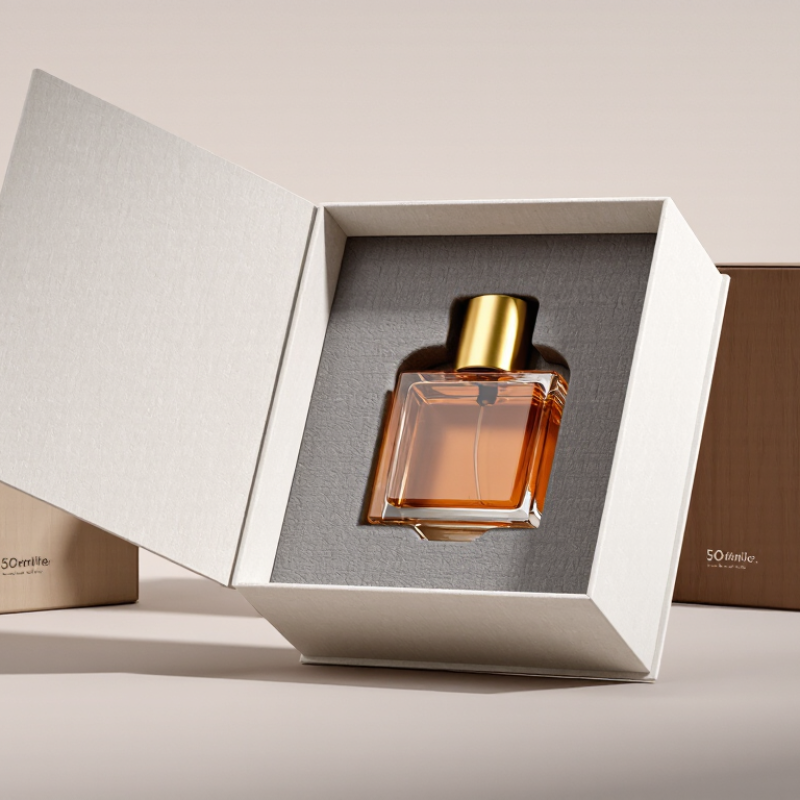
How to Choose Custom Perfume Packaging Boxes?
Define Your Perfume Packaging Requirements and Brand Positioning
Start with the perfume itself. Record the bottle height, shoulder shape, cap clearance, and total weight. A box that fits tightly may protect better, but it can slow packing and create costly production tolerances. In my packaging projects, a two-millimeter gap often changed the insert design completely. Decide whether your positioning feels refined, artistic, natural, or accessible. Materials, finishes, and opening methods should express that choice. Gold foil may suggest luxury, yet excessive decoration can weaken recyclability and make the box feel visually dated.
Consumer expectations also deserve evidence. McKinsey’s 2023 global packaging survey, covering more than 11,000 consumers, reported that 60% consider sustainable packaging important in purchasing decisions. Use this insight carefully. Recycled paper, water-based coatings, and removable inserts can support a responsible image. However, sustainability claims need supplier certificates and test records. “Eco” alone is not proof. The Ellen MacArthur Foundation also promotes design choices that keep materials in use, which supports simpler structures and easier recycling. A magnetic closure looks impressive, but it may complicate separation.
Tips: Build three prototypes. Test drop resistance, shelf visibility, unboxing time, and material recovery. Ask customers what they remember, not only what they admire. Review the result honestly. The most beautiful box may still be inefficient, oversized, or difficult to recycle.
Define your perfume packaging requirements and brand positioning by matching the bottle volume with an appropriate folding-carton board weight. Larger bottles generally require stronger board and more structural protection.
Reference planning ranges: lightweight cartons suit smaller bottles, while heavier board supports larger bottles and more premium rigid-feel packaging. Final specifications should be confirmed through drop testing, bottle measurements, and finishing requirements.
Choosing perfume packaging starts with the product’s weight, bottle shape, and shipping route. Rigid paperboard gives a premium feel and resists crushing. Folding cartons reduce storage space and material use.
According to Smithers’ The Future of Sustainable Packaging to 2029, sustainable packaging demand continues to expand across consumer markets. This supports recyclable paperboard, molded pulp, and water-based coatings. However, “sustainable” does not mean automatically suitable. A weak carton can create more waste through breakage and replacement.
Structure controls both appearance and protection. Use a fitted insert when the bottle has a heavy glass base or a narrow neck. Molded pulp works well for natural textures, but its surface may need careful finishing.
EVA or foam inserts offer stronger cushioning, although disposal becomes less simple. McKinsey’s survey of more than 10,000 consumers found that 60–70% were willing to pay more for sustainable packaging.
That preference matters, but protection still comes first. I have seen attractive boxes fail because the insert shifted during transport. Good design is sometimes less decorative.
Tips: Test the packed box from several angles. Check compression, vibration, and drop performance using ISTA testing guidance. Keep at least a small clearance around the bottle, but avoid movement. Choose board thickness after testing, not guessing. Also inspect the box after humidity exposure. A beautiful package can still warp. Mine once did.
Box dimensions should follow the bottle, not the other way around. Measure the bottle’s height, width, shoulder, cap, and sprayer clearance. Then add only enough space for protection. Fit matters. An oversized box increases material use and allows movement during delivery. A practical test uses a sample bottle, a 1-meter drop test, and repeated opening trials. The insert should hold the bottle firmly without scratching glass. Molded pulp, paperboard, and foam-free structures can work, depending on weight and presentation goals. A small finger notch also improves removal.
Opening style shapes the unboxing experience. A magnetic flap feels refined, while a reverse-tuck carton usually supports efficient production. Drawer-style boxes create a slower, more deliberate reveal. Choose based on the bottle’s weight and retail handling. Do not overbuild. Heavy structures may impress briefly, but they raise shipping costs and storage demands. McKinsey’s 2020 global packaging survey found that 60–70% of consumers were willing to pay more for sustainable packaging in some categories. NielsenIQ’s 2023 sustainability report also stated that 78% of United States consumers consider a sustainable lifestyle important.
Finishes should support the design, not hide weak structure. Soft-touch coating offers a smooth hand feel, while foil stamping highlights small details such as a monogram or fragrance name. Matte varnish can reduce fingerprints. However, excessive coatings may complicate recycling. This is where packaging decisions need reflection. A beautiful box can still feel wasteful. Request material specifications, recycling guidance, and test samples before approving production. Expect to revise the first prototype. That is normal.
Customization should begin with the bottle, not the artwork. Measure its height, shoulder, cap, and movement inside the box. A precise insert prevents rattling and reduces protective materials. Decide whether the box needs a drawer, magnetic flap, window, or simple tuck closure. More features create distinction, but they also increase tooling, assembly time, and cost.
Sustainability requires evidence, not green language.
Smithers’ The Future of Sustainable Packaging to 2028 estimates the global sustainable packaging market could reach $393.9 billion by 2028. Ask suppliers about recycled content, certified paper fibers, water-based inks, and easy material separation.
PwC’s 2024 Voice of the Consumer Survey reports that 46% of consumers buy more sustainable products, while 80% would pay more for them. Yet, recycled board may show small color variations. That detail can challenge premium expectations.
Production choices affect reliability. Confirm minimum order quantities, sampling stages, dieline tolerances, and compression testing before approval. Offset printing suits larger runs and consistent color. Digital printing supports shorter runs and variable designs.
Foil stamping adds a reflective accent, but it may complicate recycling. Request a physical proof, not only a screen image. Screen colors can mislead.
I have seen elegant artwork fail because the dark background swallowed fine text. A simpler layout may perform better, although it can feel less dramatic. Evaluate rub resistance, edge quality, and assembly speed under real factory conditions.
Choosing custom perfume packaging boxes requires more than comparing unit prices. Grand View Research estimates the global perfume packaging market will grow at about 5.8% annually from 2023 to 2030. That growth attracts more suppliers, but not all factories offer equal control. Request samples before discussing large quantities. Check board thickness, bottle clearance, insert movement, print registration, coating consistency, and carton compression. A beautiful sample can still hide weak production control.
Compare at least three suppliers using the same specification sheet. Ask for material certificates, inspection procedures, minimum order quantities, and replacement terms. Smithers’ The Future of Luxury Packaging to 2028 highlights premium packaging’s focus on presentation, sustainability, and material efficiency. However, recycled board may change surface smoothness or color accuracy. Test it. Do not trust photographs alone. I once approved a sample with a slightly loose insert, assuming production would improve. It did not.
Separate costs into tooling, sampling, materials, printing, assembly, freight, and taxes. A low box price may exclude structural revisions or export packaging. Request a landed-cost estimate in writing. Confirm whether delivery timing includes sampling and inspection. For realistic planning, allow two to four weeks for structural development, one to two weeks for sampling, and three to six weeks for production, depending on quantity and finishing. Add buffer time. Delays often begin with unclear artwork or late approvals, not manufacturing itself. Data from the International Trade Centre also shows freight conditions can shift quickly, so delivery promises should include a defined shipping method and contingency plan.
Measure bottle height, shoulder shape, cap clearance, and total weight. Keep a small gap. Avoid rattling.
Rigid paperboard resists crushing and feels substantial. Folding cartons save storage space and material. Heavy glass needs a fitted insert.
Foam cushions strongly but may complicate disposal. Molded pulp offers texture and easier recycling. Test movement before deciding.
Choose drawers, windows, magnetic flaps, or tuck closures carefully. Extra features increase tooling and assembly time. Simple can work better.
Ask for recycled-content records, fiber certificates, and coating information. Check whether materials separate easily. “Eco” alone proves little.
Test drops, compression, vibration, humidity, and bottle movement. Inspect the box after each test. Our first insert was too tight.
Offset printing supports larger runs and stable colors. Digital printing suits shorter runs and changing designs. Always request a physical proof.
Review minimum order quantities, dieline tolerances, samples, edge quality, and assembly speed. Check fine text on dark backgrounds. Screens can mislead.
Choosing custom perfume packaging boxes begins with clearly defining your product requirements and brand positioning. Consider the perfume bottle’s size, weight, shape, and fragility, as well as the image you want the packaging to communicate. Select suitable materials, box structures, and protective features to improve durability during storage and transportation. Accurate dimensions, fitted inserts, and an appropriate opening style can enhance both protection and the customer experience.
You should also evaluate surface finishes, printing methods, colors, textures, and other customization options to create a consistent presentation. Sustainability is increasingly important, so consider recyclable materials, efficient structures, and responsible production processes. Before making a final decision, compare suppliers by reviewing samples, material quality, customization capabilities, production costs, minimum order quantities, and delivery timelines. A reliable supplier should provide clear communication, consistent workmanship, and practical solutions that balance appearance, protection, budget, and production efficiency.