Industry Knowledge & Insights

Packaging Insights & Expert Guides

Discover in-depth articles on structural design, luxury finishes, sustainable materials, and practical packaging solutions for modern brands.

0%

In 2026, stationery packaging does more than protect notebooks, pens, and cards. It introduces your brand before a customer opens the lid. Choosing custom stationery rigid boxes requires more than attractive artwork. You need to judge structure, materials, production quality, and real user experience. A rigid box should feel firm in the hand, close without force, and survive ordinary delivery handling. Small details matter. A crooked logo or loose insert can make a premium product feel careless.

Start with the stationery itself. Measure the tallest item, add protective clearance, and test the box with the actual contents. A pen set may need a molded tray, while handmade cards may need a soft paperboard divider. Consider magnetic closures, ribbon pulls, and removable inserts according to your budget and customer habits. In 2026, buyers also notice recycled papers, water-based coatings, and responsible sourcing. These choices should be verified, not assumed from green-looking colors. Ask suppliers for material details, sample photos, and production proofs. Claims need evidence.

Experience remains valuable, but it can also create blind spots. A box that worked for last year’s launch may not suit a heavier collection or a different sales channel. Order a physical prototype and inspect its corners, print alignment, odor, and opening movement. Then ask someone unfamiliar with the product to unpack it. Their hesitation may reveal a confusing closure or poor fit. Reliable suppliers explain tolerances, timelines, costs, and quality checks clearly. No option is perfect. The right choice balances protection, presentation, sustainability, and practical performance.
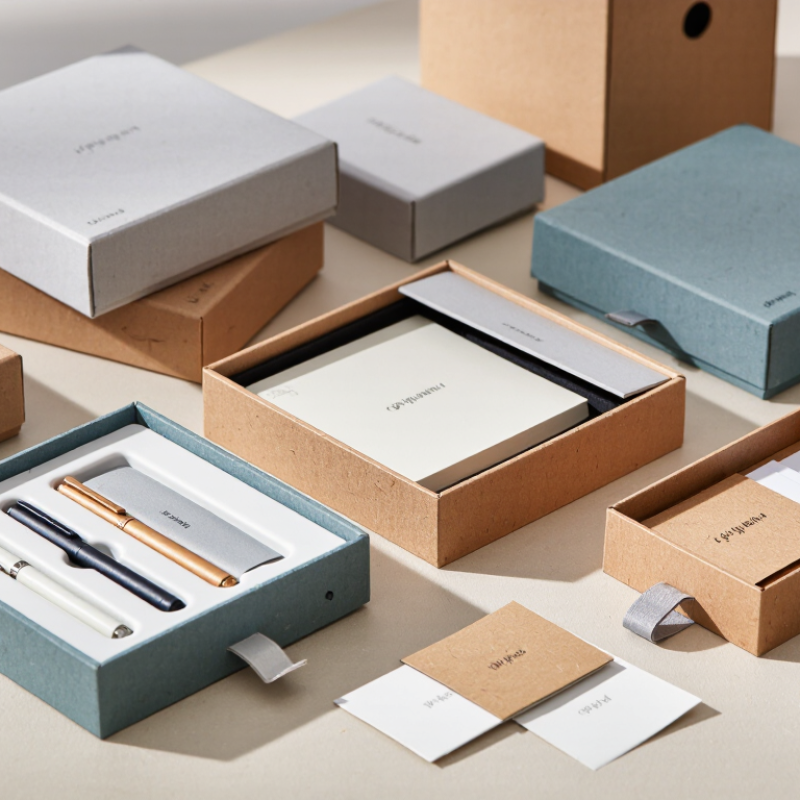
How to Choose Custom Stationery Rigid Boxes in 2026?

Define Your Stationery Packaging Needs and Brand Objectives

How to Choose Custom Stationery Rigid Boxes in 2026?

Define your stationery packaging needs before discussing artwork or finishes. List the products first: notebooks, envelopes, cards, pens, or mixed sets. Measure each item, including accessories and protective tissue. Fit matters. A box that is 5 millimeters too large can increase movement, material use, and shipping costs. Choose the opening style according to the customer experience you want. A drawer box feels deliberate, while a lift-off lid supports quick packing. Confirm board thickness, insert structure, closure strength, and storage conditions with your packaging supplier.

Your brand objective should guide every physical choice. A premium gift set may need textured paper, precise edges, and a calm color system. A practical office collection may need lower weight and easier recycling. PwC’s Voice of the Consumer Survey 2024 found that consumers would pay an average 9.7% premium for sustainably produced goods. Smithers’ sustainable packaging outlook also identifies material reduction and recyclability as continuing market priorities. These figures support thoughtful design, but they do not replace customer testing. Looks can mislead. A beautiful rigid box may still feel excessive or difficult to reuse. I have seen small inserts shift during delivery, despite appearing perfect during sampling.

Tips: Request one plain prototype and one finished sample. Test opening, stacking, and a basic drop sequence. Check whether the stationery slides, corners crush, or magnets weaken. Record dimensions and material specifications. Then compare the experience against your brand promise, budget, and environmental claims.

Choose the Right Rigid Box Structure and Opening Style

How to Choose Custom Stationery Rigid Boxes in 2026?

Choose the Right Rigid Box Structure and Opening Style

A stationery box should protect paper goods without feeling difficult to open. In practical packaging projects, the product height usually decides the structure. A shallow shoulder-neck box suits cards, envelopes, and writing sets. A lift-off lid offers easier assembly and lower tooling complexity. For premium notebooks, a book-style magnetic box creates a clear opening sequence and better shelf presentation.

Opening style affects perceived value. Smithers’ packaging outlook reports that the global packaging market is already worth more than one trillion dollars annually. That scale increases pressure to reduce material waste and improve user experience. A drawer box works well for compact stationery because the inner tray moves smoothly and keeps products aligned. However, magnets can add cost and complicate recycling if they are not removable. Small details matter.

The choice should also reflect paper weight and storage conditions. Grand View Research reports that the global paper packaging market was valued at approximately 427 billion dollars in 2023, showing continued demand for fiber-based formats. Use rigid board with reinforced corners when notebooks are heavy. Add a ribbon pull only when the box needs a softer opening motion. Otherwise, it may look decorative but provide little function. A perfect structure does not exist. Mockups often reveal problems that drawings hide, especially tight lids, weak hinges, and wasted internal space.

Compare Materials, Finishes, and Protective Features

How to Choose Custom Stationery Rigid Boxes in 2026?

Material choice affects both presentation and protection. Recycled paperboard offers a responsible option, but its natural fibers may create slight color variation. Virgin fiber board usually provides cleaner printing and stronger edges. For heavier stationery, choose a thicker board with reinforced corners. I have found that attractive boxes can still fail when their walls bend during delivery. Material samples should be tested with real products, not empty boxes.

Finishes change the customer’s first impression. Matte coating creates a calm, refined surface and hides minor handling marks. Gloss coating makes colors brighter, but fingerprints can become noticeable. Soft-touch finishes feel luxurious, yet they may scratch more easily than expected. Foil stamping and embossing add detail, though excessive decoration can weaken folding areas. Protective features matter just as much. A fitted insert prevents cards from shifting, while a magnetic closure reduces accidental opening. Moisture-resistant coatings help in humid storage conditions, but they do not replace sealed shipping protection.

Tips: Request a physical prototype before approving production. Place your actual stationery inside it. Shake the box gently, stack several boxes, and inspect the corners afterward. Check whether the lid remains aligned after repeated opening. Ask for board thickness, coating specifications, and test results in writing. Small color differences may be acceptable, but unclear specifications create avoidable problems. A cheaper finish is not always economical.

Set Customization, Sustainability, and Production Requirements

How to Choose Custom Stationery Rigid Boxes in 2026?

Set Customization, Sustainability, and Production Requirements

A custom stationery rigid box should protect the contents and express the intended use. Define the stationery set before discussing decoration. Record each item’s length, width, thickness, and quantity. Measure the fit. A box for cards needs different support than one for notebooks and pens. Consider lift ribbons, compartments, foam-free inserts, and removable trays. These details affect both presentation and production cost.

Sustainability requires more than choosing recycled board. Ask whether the box uses responsibly sourced paperboard, water-based inks, and recyclable inserts. Avoid unnecessary laminates, mixed materials, and permanent magnets when possible. A fabric lining may look premium, but it can complicate recycling. Keep components separable. This is often overlooked. Request material documentation and confirm the disposal route in your target market.

Production planning prevents expensive surprises. Approve a physical prototype, not only a digital rendering. Check lid tension, corner alignment, print color, and surface resistance. Test the corners. A beautiful sample can still collapse during shipping. Specify board thickness, size tolerances, order quantity, and acceptable color variation. Leave enough time for tooling, sampling, manufacturing, and inspection. Some teams rush the artwork and blame the factory later. That is an avoidable mistake. Still, no specification is perfect; real packing tests may reveal a better structure. Use those findings before mass production.

How to Choose Custom Stationery Rigid Boxes in 2026? — Set Customization, Sustainability, and Production Requirements

Decision Dimension Common Options Realistic Planning Data Recommended Selection for 2026 Production Considerations
Box Construction Lift-off lid Magnetic closure Drawer style Book-style Rigid boxes are commonly made with wrapped paperboard over a structure board. A board thickness of approximately 1.5–2.5 mm is widely used for stationery packaging. Choose a lift-off lid for simple, cost-conscious packaging; choose a magnetic, drawer, or book-style structure when opening experience and repeated use are important. Complex closures require additional die-cutting, assembly, hardware, and quality-control steps.
Internal Dimensions Exact-fit insert, adjustable paper insert, molded-pulp insert, or compartment tray Allow a practical clearance of about 2–5 mm around the packed stationery set, depending on product shape and insert design. Measure the packed set rather than individual items. Use compartments for pens, cards, notebooks, envelopes, or accessories that may move during transport. Excessive empty space increases material use and shipping volume; insufficient clearance may cause corner damage or difficult packing.
Stationery Set Capacity Single-item box, small set, complete correspondence set, premium gift set A small stationery set commonly includes several paper goods and accessories; the final capacity depends on paper size, sheet count, envelope quantity, and accessory dimensions. Create a packing mock-up with the actual contents before approving the box size. Paper thickness, moisture, and compression during transport can change the final stack height.
Surface Paper Uncoated paper, coated art paper, textured paper, specialty paper Wrapped face papers are often selected in the approximate range of 100–157 g/m² for a balance of printability, folding, and handling. Use uncoated or textured paper for a tactile, paper-forward appearance; use coated paper when sharp photographic or detailed graphic reproduction is required. Highly textured papers may reduce fine-detail print clarity and can require a physical color and finishing proof.
Printing Method Offset lithography, digital printing, foil stamping, blind embossing, screen printing Offset printing is generally efficient for repeatable medium-to-large quantities; digital printing is useful for short runs, variable artwork, or multiple versions. Use offset printing for consistent large-volume artwork and digital printing for prototypes, short runs, or personalized stationery collections. Specify color references, proofing method, minimum line weight, and acceptable registration tolerance before production.
Decorative Finishing Matte coating, gloss coating, soft-touch coating, foil, embossing, debossing Each additional finish adds tooling, setup, inspection, and handling requirements. Embossing and debossing require suitable paper and sufficient board support. Prioritize one or two finishes that support the design instead of combining many effects on a small surface. Foil and embossing may require separate tooling. Fine details can lose definition on textured or heavily coated surfaces.
Plastic Reduction Paperboard insert, molded-pulp insert, paper belly band, paper tape, reusable box Replacing plastic trays or bags with fiber-based components can simplify material separation, provided the structure protects the contents adequately. Use a paperboard or molded-pulp insert where product geometry and protection requirements allow it. Verify compression strength, dust control, moisture resistance, and fit through transport testing before removing plastic components.
Recycled Content Virgin fiber board, recycled-content board, mixed-fiber board Recycled content varies by board grade and supplier specification. It should be stated as a verified percentage rather than assumed from the paper’s appearance. Request the exact recycled-content percentage and supporting documentation for the selected board and wrap paper. Higher recycled content can affect stiffness, surface smoothness, color consistency, and print performance.
Recyclability of the Finished Box Paper-based construction, paper-based construction with magnets, laminated construction, mixed-material construction A box is easier to recycle when paper components can be separated from magnets, foam, plastic windows, ribbons, and other non-paper materials. Favor mono-material or easy-to-separate paper structures and minimize permanent mixed-material attachments. Confirm local recycling requirements because accepted materials and sorting systems differ by market.
Coating and Adhesive Choice Uncoated surface, water-based coating, film lamination, standard paperboard adhesive Coatings, laminates, and adhesives influence appearance, scuff resistance, recyclability, and the ease of fiber recovery. Use the lightest coating that meets handling and moisture requirements, and ask for fiber-recovery or recycling information when sustainability is a priority. Some coatings improve durability but can complicate recycling or reduce the natural feel of the paper.
Minimum Order Quantity Prototype, short production run, standard production run, repeat program Custom rigid-box minimums commonly begin around 100–500 units, but the actual minimum depends on tooling, materials, printing, and assembly requirements. For a first launch, request quotations at several quantity levels, such as 100, 300, 500, and 1,000 units. Unit cost normally decreases as quantity rises, while custom inserts, foil tooling, and special materials can increase the minimum order.
Prototype and Approval Blank structural sample, printed proof, finished pre-production sample A basic structural sample may take several working days; a finished sample can require additional time for printing, finishing, and assembly. Approve structure, artwork, color, fit, closure force, and insert performance before authorizing mass production. A digital image cannot reliably show final color, texture, stiffness, or foil appearance.
Production Lead Time Standard construction, printed construction, multi-finish construction After artwork and samples are approved, a typical custom rigid-box production plan may require approximately 15–30 working days, excluding shipping and unusual material delays. Build the schedule around artwork approval, material availability, sampling, production, inspection, and transportation rather than production alone. Seasonal demand, imported materials, complex assembly, and multiple color versions can extend the schedule.
Quality-Control Points Dimensions, squareness, surface finish, color, bonding, closure, insert fit, carton condition Inspect samples from the production batch and define measurable acceptance criteria before manufacturing begins. Use a written specification covering dimensions, material grades, color tolerance, finish location, packing quantity, and defect classification. Check both individual boxes and packed master cartons to identify damage caused during assembly or transport.
Transport and Storage Individual tissue wrap, protective sleeve, divider, corrugated master carton Rigid boxes are sensitive to corner impact, abrasion, compression, and high humidity during storage and transport. Use protective separators and strong outer cartons, especially for boxes with dark surfaces, foil, delicate edges, or protruding hardware. Confirm carton stacking limits, storage humidity requirements, and drop or compression testing needs for the distribution route.
Best-Fit Selection Value-focused, sustainability-focused, premium presentation, short-run personalization There is no single best box construction; the correct choice balances protection, appearance, material impact, quantity, budget, and schedule. Choose the simplest structure that protects the stationery, communicates the desired quality, and meets the intended sustainability requirements. Document all requirements in a technical specification before comparing quotations.

Planning note: The numerical ranges above are general industry planning benchmarks for custom rigid stationery boxes, not fixed standards. Confirm final specifications, testing requirements, material documentation, minimum order quantity, and lead time with the selected packaging producer.

Evaluate Suppliers, Costs, Samples, and Delivery Timelines

How to Choose Custom Stationery Rigid Boxes in 2026?

Evaluate Suppliers, Costs, Samples, and Delivery Timelines

In 2026, custom stationery rigid boxes should be judged beyond attractive renders. Ask suppliers for board grade, paper finish, tolerances, and production photos. A reliable supplier explains defects openly and provides written specifications. Request references for similar box sizes, not unrelated luxury packaging. Check whether sample approvals are recorded before mass production begins. This prevents expensive surprises.

Cost needs more than unit price. Compare tooling, sampling, printing, inserts, packing, freight, and possible revisions. A low quote may exclude protective corners or delivery surcharges. Measure your stationery stack carefully; a two-millimeter error can crush envelopes. Ask for tiered pricing at several quantities. My own mistake was approving a beautiful sample without testing its lid tension. It looked perfect. The finished run felt too tight.

Tips: Request one plain structural sample and one fully printed sample. Test both with actual cards, notebooks, and pens. Confirm color tolerance, moisture protection, carton counts, and dispatch dates in writing. Build a small buffer before seasonal launches. Suppliers should separate sample time from production time, then state realistic shipping windows. Ask what happens if inspection fails. That answer matters.

How to Choose Custom Stationery Rigid Boxes in 2026?

Recommended supplier-evaluation weighting for comparing costs, samples, quality, and delivery performance.

Use quality consistency and landed cost as the primary decision factors, then verify sample accuracy and delivery reliability before placing a bulk order. The percentages are a practical planning benchmark and should be adjusted according to order volume, materials, finishing requirements, and destination.

FAQS

What should be defined before designing a custom stationery rigid box?

List every item, including notebooks, cards, pens, envelopes, and tissue. Measure the complete set. A five-millimeter gap can increase movement and shipping costs. Do not trust estimates alone.

How can the box fit stationery products properly?

Measure product length, width, height, and accessories together. Leave only enough space for protection and easy removal. Test whether items slide during handling. A neat sample can still fail delivery.

Which opening style suits stationery packaging?

A drawer box suits compact writing sets and keeps products aligned. A lift-off lid supports faster packing and simpler production. A book-style box creates a slower, more premium opening experience. Choose function before decoration.

When is a magnetic closure useful?

It can make a notebook box feel secure and refined. However, magnets may increase cost and complicate recycling. Check whether they can be removed during disposal. The effect may not justify the extra parts.

How should the box structure match the stationery weight?

Heavy notebooks need rigid board and reinforced corners. Cards and envelopes may suit shallower structures. Check hinges, shoulders, and lid tension carefully. Drawings often hide these weaknesses.

What materials can support a more responsible packaging design?

Reduce unnecessary inserts and avoid oversized boxes. Choose recyclable fiber-based materials when practical. Keep material claims specific and testable. “Eco-friendly” alone says very little.

What samples should be requested before production?

Request one plain prototype and one finished sample. Compare their fit, texture, opening, and stacking performance. Use a basic drop test. Look for crushed corners and weakened closures.

How can the packaging support the intended customer experience?

A premium gift set may need textured paper, precise edges, and calm colors. A practical office set may need lower weight and easier recycling. The box should feel useful after opening. That part is often forgotten.

Conclusion

Choosing custom stationery rigid boxes in 2026 requires a clear balance between brand presentation, product protection, and practical production goals. Start by defining the stationery items, box quantity, target audience, budget, and desired brand impression. Then select a suitable rigid box structure and opening style, such as a lift-off lid, magnetic closure, drawer design, or hinged format, based on usability and the unboxing experience. Consider durable materials, refined finishes, accurate printing, and protective inserts that keep products organized and secure during storage and delivery.

Customization should also reflect sustainability and production efficiency. Evaluate recyclable or responsibly sourced materials, minimal-waste designs, and finishes that support both appearance and environmental objectives. When comparing suppliers, review their manufacturing capabilities, quality standards, sample accuracy, customization options, pricing, minimum order quantities, and delivery schedules. Requesting prototypes before full production can help confirm dimensions, colors, construction, and functionality. A thoughtful evaluation process ensures that custom stationery rigid boxes are attractive, reliable, cost-effective, and aligned with long-term packaging requirements.

Seraphina

Seraphina

Seraphina is a dedicated marketing professional with a deep understanding of the company’s products, customer needs, and rapidly changing market trends. Through thoughtful research and clear communication, she transforms complex product features into practical insights that help readers make......