Discover in-depth articles on structural design, luxury finishes, sustainable materials, and practical packaging solutions for modern brands.
Choosing premium rigid jewelry boxes requires more than judging a glossy surface or impressive logo. Buyers must examine structure, materials, interior protection, and opening experience. A box should feel substantial before the jewelry is even revealed. Its corners should remain sharp, its hinges should move smoothly, and its insert should hold each piece without pressure marks.
Brand strategist Marty Neumeier states, “Design is the silent ambassador of your brand.” That idea is especially relevant to premium rigid jewelry boxes. A velvet-lined drawer box can suggest quiet luxury. A magnetic closure can create a clean, modern reveal. Recycled paper coverings can communicate responsible sourcing when their texture and printing remain refined. These details influence perceived value, gifting appeal, and customer memory.
This guide explores the top types buyers commonly consider, including magnetic closure boxes, drawer-style boxes, hinged-lid designs, and custom multi-piece presentations. It also considers paperboard density, fabric inserts, foam alternatives, logo finishing, and storage practicality. Small details matter.
Yet premium does not always mean heavier or more decorated. An oversized box may waste materials and frustrate customers. A gold foil logo may look elegant in a sample but lose clarity on textured paper. These weaknesses deserve honest attention.
The best choice depends on jewelry size, brand positioning, shipping needs, and customer expectations. Experience helps, but it does not remove uncertainty. Even experienced buyers should request samples, test closures, and inspect every interior surface before approving production. A beautiful box is valuable. A dependable one is better.
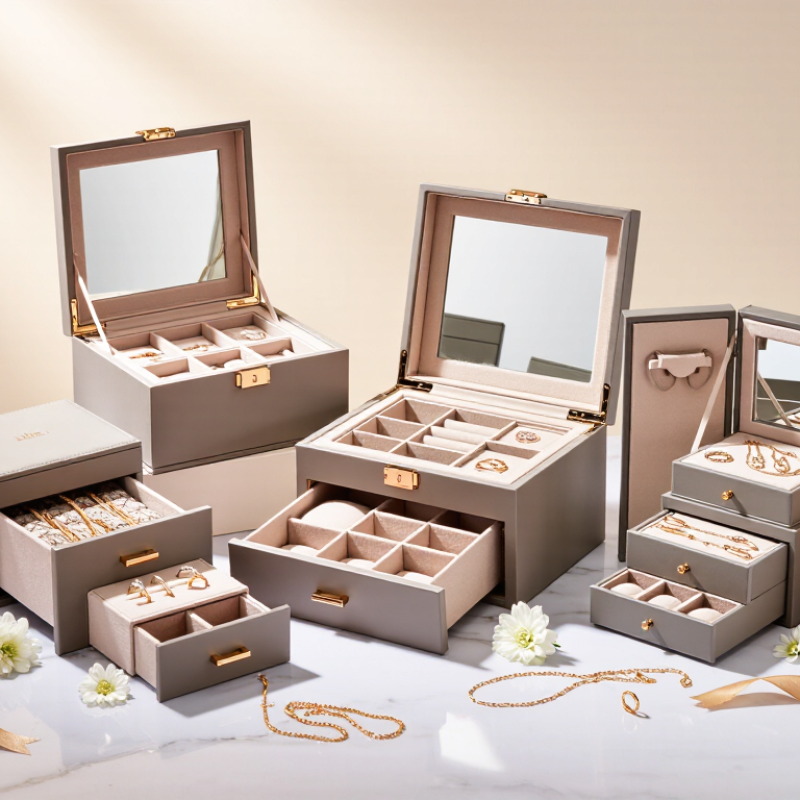
A premium rigid jewelry box is defined by performance, not weighty decoration. Its board should resist compression, while the insert keeps a ring or pendant centered during handling. For buyers, useful formats include hinged-lid, drawer, and magnetic-closure boxes. The best choice depends on opening experience, product geometry, and shipping exposure.
It should feel quiet. A clean 90-degree corner, even lid gap, and soft-touch insert communicate control.
In hands-on inspections, a 1.5–2.5 mm rigid board often provides a reassuring structure without unnecessary bulk. However, excessive foam can make a box feel expensive while reducing material efficiency. That detail deserves scrutiny.
USD 17.8 billion
Grand View Research estimates the global luxury packaging market at USD 17.8 billion in 2023.
6.5% annual growth
It projects 6.5% annual growth through 2030.
This growth reflects demand for presentation, but market size cannot define premium quality. Testing matters more at the purchasing stage. Buyers should request compression, drop, abrasion, and humidity evidence, ideally linked to recognized packaging protocols such as ISTA procedures. A rigid shell with poor tolerances may scrape metal surfaces or let a stone shift. Sustainable construction also needs proof. The Ellen MacArthur Foundation’s Global Commitment 2023 report tracked commitments from more than 1,000 organizations worldwide. Use paper-based board, water-based coatings, and removable inserts when they meet protection needs. Still, not every recycled box is premium. Weak hinges, vague sourcing, and inaccurate recycling instructions remain warning signs.
Premium rigid jewelry boxes rely on dense boards, careful wrapping, and stable internal supports. In practice, greyboard or chipboard forms the shell because it resists bending during storage and transport. High-density board feels solid, but excessive thickness adds weight and shipping cost. That trade-off is easy to underestimate.
Many buyers choose paper-wrapped boxes for clean texture and flexible color matching. Textured paper, linen-like fabric, or coated stock can create a more tactile finish. The surface should resist scuffing, especially around corners and drawer pulls.
Inside, foam, velvet, and molded paper pulp suit different jewelry shapes. Soft foam cushions rings and pendants, while narrow slots prevent movement. Velvet creates a richer presentation, yet it can collect dust and show fingerprints. Molded pulp offers a firmer, lower-plastic option, but its surface may feel less luxurious.
A practical insert uses a snug fit without pressing delicate settings. I recommend testing several sizes with real pieces before approving production. A beautiful insert can still fail if a necklace tangles after repeated opening.
Structural quality depends on more than appearance. Check lid alignment, hinge strength, magnetic closure, and corner compression. A lift-off lid suits simple presentation, while drawer structures improve access and layered storage. Book-style boxes save display space, but weak spines may loosen over time.
Magnetic closures should hold firmly without snapping against fragile contents. For heavier jewelry, reinforced corners and thicker base panels reduce flexing. I have found that handmade-looking irregularities sometimes signal poor tolerances, though not always. A measured prototype remains more trustworthy than a polished sample alone.
Premium rigid jewelry boxes come in several practical forms, each serving a different presentation need. Magnetic-closure boxes offer a smooth opening experience and a clean, modern appearance. Their concealed magnets keep the lid aligned, while dense board protects rings, earrings, and small pendants. Drawer-style boxes create a slower, more deliberate reveal. The inner tray can hold a velvet insert, a certificate card, or a small care guide.
Book-style rigid boxes suit collections that need more visual space. They open like a cover and can include layered compartments for multiple jewelry pieces. Lift-off lid boxes remain a dependable choice for classic packaging. They are simple, sturdy, and easier to stack during storage. However, a loose lid may feel less secure when the box moves frequently. That small detail matters in real handling.
Travel jewelry boxes focus on compact protection. A firm shell, elastic straps, and soft dividers help prevent scratches and tangling. Some premium designs use hinged compartments for rings, chains, and studs. Presentation boxes with custom inserts provide the closest fit. Foam, flocked fabric, or molded paper can support each piece without excessive movement. Yet, a highly fitted insert may limit future product changes. This is an often-overlooked weakness. Buyers should check hinge strength, edge finishing, insert density, and odor before approving a large order.
A beautiful box is not automatically a reliable one. Surface texture, closure testing, and repeated opening trials reveal more than photographs.
Premium rigid jewelry boxes are defined by more than firm walls and polished surfaces. Their interior layouts should match the collection inside. A ring-heavy assortment needs slim velvet slots with enough spacing for taller settings. Earrings benefit from paired cards or small recessed wells. Loose pieces should not touch. That prevents scratches and makes selection easier. In my packaging evaluations, a precise fit often feels more luxurious than extra decoration. Small detail, major effect.
For necklaces, use individual channels with soft separators. A shallow lift helps customers remove chains without pulling clasps. Bracelets need longer compartments, especially when cuffs have rigid profiles. A two-level tray can separate daily pieces from statement designs. It also uses vertical space efficiently. But deep compartments can hide small pendants. I have seen attractive layouts fail there. Visibility must be tested under ordinary room lighting, not only studio lamps.
Mixed collections require flexible inserts, yet flexibility should not mean looseness. Removable dividers can create sections for rings, studs, bangles, and charms. A suede-like lining reduces movement, while a firm base keeps the tray stable. For heirloom-style collections, a lift-out layer adds protection and ceremony. For travel sets, lighter inserts may be more practical. This is where design judgment matters. More padding is not always better; it can crowd delicate pieces and slow daily use.
Top Types of Premium Rigid Jewelry Boxes for Buyers
Choosing the right jewelry box starts with the item it must protect. A slim ring box needs a firm slot, while layered necklaces need space between compartments. Fit matters. Measure the jewelry, including clasps and protective pouches. A box that looks luxurious may still crush delicate chains. Rigid board, covered with fabric or paper, should feel stable without becoming unnecessarily heavy.
Buyers should inspect the insert closely. Soft velvet or microfiber can reduce scratches, but loose fibers may collect around fine settings. Test the hinge, magnetic closure, and tray movement on a physical sample. I once chose a box with an attractive finish, yet its lid opened too easily during shipping. That mistake changed my evaluation process. A reliable supplier should provide material details, dimensions, load limits, and quality-control information.
The right style also depends on usage. Drawer boxes suit collections and retail displays, while hinged boxes create a stronger presentation moment. Travel cases need compact shapes and secure closures. Consider humidity, storage duration, and delivery conditions. Light-colored interiors reveal dust quickly, but dark surfaces may hide small particles. Custom printing can improve presentation, though excessive decoration sometimes weakens the product’s practical appeal. Check recyclable components, supplier consistency, and sample performance before placing a large order.
| Box Type | Typical Jewelry Capacity | Common Construction | Typical Exterior Materials | Interior Protection | Presentation Style | Best Use | Main Advantages | Potential Limitations | Buyer Selection Tips |
|---|---|---|---|---|---|---|---|---|---|
| Ring Box | One ring or a pair of small earrings | Compact rigid board shell with a fitted insert | Paper wrap, linen-textured paper, leatherette, or fabric | Ring slot, soft velvet, microfiber, or molded foam insert | Focused and presentation-oriented | Engagement rings, wedding rings, and gift presentation | Small footprint; keeps the jewelry centered; easy to store and ship | Limited capacity; unsuitable for larger pieces | Check the slot width, insert firmness, closure strength, and internal clearance for the ring setting |
| Earring Box | One pair of studs, hoops, or drop earrings | Rigid hinged or lift-off construction with an earring panel | Wrapped paperboard, fabric, wood veneer, or leatherette | Perforated card, velvet pad, microfiber, or removable earring insert | Neat, symmetrical, and compact | Stud earrings, drop earrings, and small hoop collections | Prevents pairs from separating; supports clear product visibility | Long or heavy earrings may need extra internal height | Measure the longest earring and confirm that the insert does not press against delicate surfaces |
| Pendant and Necklace Box | One pendant, chain, or short necklace | Deep rigid box with a neck-hanger or necklace panel | Premium paper wrap, textile, wood veneer, or coated board | Necklace hooks, slit panel, soft lining, and optional chain channel | Vertical display with a clear focal point | Pendants, fine chains, and short-to-medium necklaces | Reduces tangling; displays the pendant in an upright position | Very long chains may require a larger box or additional winding area | Match the interior length to the chain length and look for secure hooks that do not scratch metal |
| Bracelet Box | One bracelet, bangle, or cuff | Long rigid shell with a shaped bracelet cushion | Paper wrap, fabric, leatherette, or wood-based finish | Curved cushion, protective lining, and optional retaining strap | Long-format and premium gift presentation | Chain bracelets, bangles, cuffs, and charm bracelets | Accommodates wider jewelry than a standard ring or earring box | Rigid dimensions can increase storage and shipping volume | Measure both the bracelet length and the widest decorative element before ordering |
| Watch and Jewelry Box | One watch or a combination of small jewelry pieces | Structured rigid case with a shaped watch cushion and accessory slots | Leatherette, coated paper, fabric, wood veneer, or lacquered board | Soft watch pillow, divided compartments, and scratch-resistant lining | Formal and multifunctional | Watches, watch-and-bracelet gift sets, and larger accessories | Provides stronger organization and more space than a single-purpose box | May be oversized for small jewelry; cushion size must suit the watch strap | Check cushion diameter, compartment depth, hinge quality, and whether the lining is non-abrasive |
| Multi-Piece Jewelry Set Box | Several coordinated pieces, such as a ring, earrings, and pendant | Large rigid box with removable or fixed compartment inserts | Wrapped rigid board, fabric, leatherette, or wood-based panels | Individual slots, dividers, ring rolls, earring panels, and necklace hooks | Luxury set presentation with organized compartments | Wedding sets, coordinated collections, and premium gift sets | Creates a complete unboxing experience; keeps multiple items separated | Higher material use, weight, and storage requirements | Confirm every compartment size and ensure chains, rings, and earrings have separate protection |
| Travel Jewelry Case | Multiple small pieces for short-term travel | Rigid protective case with a compact hinged or zippered format | Hard board, molded shell, fabric, microfiber, or leatherette | Dividers, elastic loops, ring rolls, earring panels, and zip pockets | Practical, compact, and protective | Travel storage, retail gift sets, and portable jewelry organization | Improves separation during transport; offers several storage formats | Compact compartments may not fit oversized jewelry or long necklaces | Prioritize secure closure, lightweight construction, interior separation, and a size suitable for luggage |
| Drawer-Style Jewelry Box | One set or several individual jewelry pieces | Rigid outer shell with one or more sliding drawers | Wrapped paperboard, wood veneer, fabric, or coated rigid board | Layered trays, velvet lining, dividers, and removable inserts | Elegant, structured, and display-friendly | Retail counters, keepsake storage, and premium collection packaging | Offers layered organization; suitable for reusable storage after purchase | Drawers need accurate fitting; larger formats require more shelf space | Inspect drawer smoothness, pull strength, tray accessibility, and the stability of stacked compartments |
| Magnetic-Lid Rigid Box | One item or a small coordinated jewelry set | Foldable rigid board shell with concealed magnetic closure | Paper wrap, textile, leatherette, or specialty coated paper | Custom foam, velvet, microfiber, or molded insert | Modern, clean, and gift-focused | Premium retail packaging and elevated gift presentation | Easy to open; clean exterior; supports customized inserts and finishes | Magnet strength and alignment must be controlled; not ideal for very heavy contents | Verify closure reliability, magnet placement, lid alignment, and the compatibility of the insert with the jewelry weight |
Performance matters more than heavy decoration. A strong shell resists compression during handling. The insert keeps each piece centered and stable. Clean corners, even lid gaps, and a quiet opening suggest careful control.
Magnetic closures provide a smooth, modern opening. Drawer boxes create a slower reveal and hold cards neatly. Book-style boxes suit collections with several pieces. Lift-off lids remain practical for stacking and storage.
A 1.5–2.5 mm board often provides dependable structure. Thicker material can add bulk without improving protection. Inspect the box under pressure. Weight alone proves very little.
Request compression, drop, abrasion, and humidity evidence. Check whether testing follows recognized packaging procedures. Open and close samples repeatedly. A photograph cannot reveal weak hinges or poor tolerances.
The insert should match the product’s shape and movement. Soft fabric, foam, or molded paper can reduce scratches and shifting. Rings should stay centered. Chains need separation to prevent tangling.
They can work when the shell is firm and dividers hold pieces securely. Elastic straps help stabilize rings and small items. However, compact designs may sacrifice presentation space. Protection should be tested under real handling conditions.
Paper-based board and water-based coatings can reduce material concerns. Removable inserts may simplify reuse or recycling. Sustainability claims need clear sourcing and disposal instructions. A recycled box is not automatically well made.
Watch for loose lids, weak hinges, sharp edges, strong odors, and shifting inserts. Scraping sounds may indicate poor internal tolerances. Excessive foam can appear luxurious while wasting material. I would inspect these details before trusting a large order.
Premium rigid jewelry boxes are defined by their combination of strength, refined presentation, and reliable protection. Built with durable board, quality paper or fabric coverings, secure closures, and carefully engineered structures, they help preserve jewelry while creating an elevated unboxing experience. Common styles include hinged boxes, drawer boxes, magnetic-closure boxes, book-style boxes, and stackable presentation cases, each offering different advantages for storage, display, and gifting.
The interior should match the jewelry collection, with dedicated slots for rings, hooks for earrings, cushions for bracelets, and compartments for necklaces to reduce tangling and movement. Buyers should consider the type and quantity of jewelry, preferred opening style, storage space, customization needs, and desired level of presentation before choosing among premium rigid jewelry boxes. The right box should balance visual appeal, practical organization, structural durability, and long-term protection while complementing the value and style of the jewelry it holds.