Why Choose Custom Pre Roll Packaging Boxes?
Packaging now shapes trust before a customer sees the product. For lawful, regulated botanical products, custom pre roll packaging boxes can protect presentation, product integrity, and brand consistency. They can also support child-resistant, tamper-evident, and jurisdiction-specific requirements where applicable.
The global packaging industry is moving toward stronger sustainability standards. Smithers’ report, The Future of Sustainable Packaging to 2028, identifies recyclable materials, lighter structures, and improved recovery systems as major market priorities. McKinsey’s 2023 packaging research also found that many consumers prefer packaging with visible environmental benefits, although willingness to pay varies by market. Numbers help, but they do not solve every design problem.
Packaging expert Ellen MacArthur has stated, “Plastic pollution is not just a waste problem; it is a systems problem.” That principle matters here. A custom box should not simply look expensive. It should fit the product securely, reduce unnecessary space, communicate essential information, and support responsible disposal. Small details matter: a clean opening experience, firm internal support, readable labeling, and a finish that does not shed or create excess waste.
There is no perfect box.
A glossy package may attract attention, yet it can complicate recycling. A minimalist design may reduce material use, yet weaken shelf visibility. Thoughtful custom pre roll packaging boxes balance protection, compliance, usability, and brand recognition. The best solution depends on the product, market, materials, and real customer behavior. That is where practical testing becomes more valuable than attractive mockups.
What Are Custom Pre Roll Packaging Boxes?
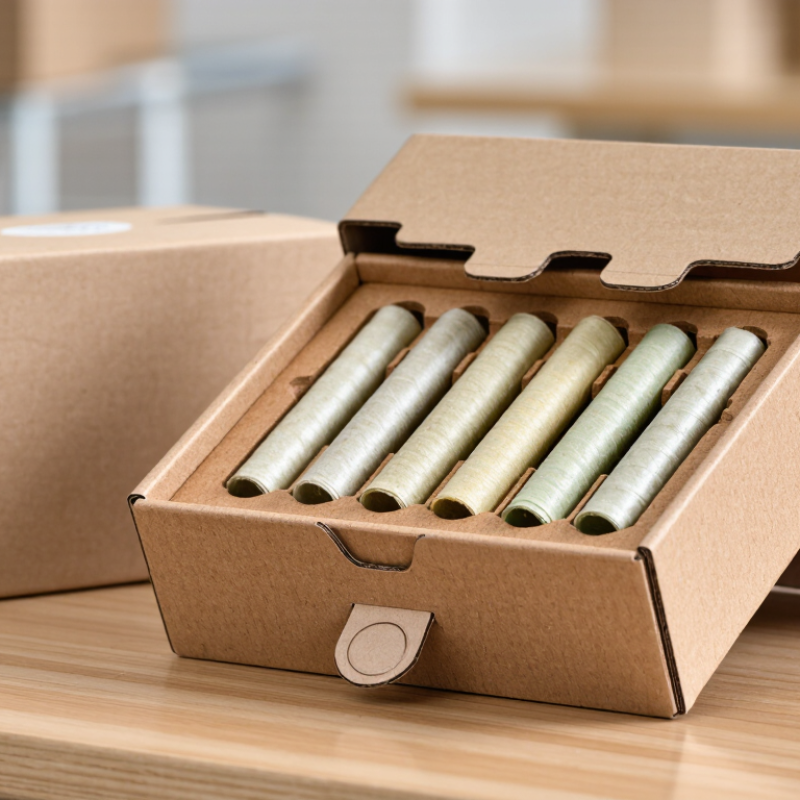
Custom pre roll packaging boxes are purpose-built cartons designed to hold, protect, and present pre-rolled products. Unlike generic sleeves, they can match the product’s dimensions, quantity, and closure style. A well-fitted box reduces movement during shipping. It also helps prevent crushed ends, loose material, and avoidable moisture exposure. Common options include folding cartons, rigid boxes, and paperboard packs with inserts. The right choice depends on shelf conditions, handling, and required product information. It is not merely a decorative container.
In professional packaging work, the box is part of the product experience. Measured compartments keep units aligned, while a firm inner tray adds stability. Printed surfaces can display batch details, storage guidance, warnings, and disposal instructions where regulations require them. Materials should be selected carefully. Recyclable paperboard may suit some formats, but coatings, adhesives, and inks can affect recycling. Small design changes matter. A slightly loose fit may look acceptable, yet it can allow movement and damage during delivery. Testing is essential, though test results may expose flaws late.
Tips: Measure the product after filling, not before. Check compression, opening force, and closure strength. Ask a packaging technician to review material compatibility and applicable local rules. Avoid claims that packaging cannot prove. A common production lesson is simple: attractive boxes can still fail when inserts bend under humidity. A sample run is wiser than trusting a screen proof. Keep the design practical.
How Custom Pre Roll Boxes Protect Pre-Rolled Products
Why Choose Custom Pre Roll Packaging Boxes?
How Custom Pre Roll Boxes Protect Pre-Rolled Products
A custom pre roll box creates a stable space around each pre-rolled product. This prevents crushing when boxes move through shipping cartons or retail displays. A fitted insert can reduce contact between items, limiting friction and surface damage. Even a small gap can matter.
Material selection also affects protection. Rigid paperboard resists bending, while a well-designed inner tray keeps products aligned. A secure closure helps prevent accidental opening during handling. If the product requires moisture control, packaging may include a suitable barrier layer. That feature should be tested, not assumed.
Light and air exposure deserve attention too. Excess exposure can affect texture, aroma, and overall presentation over time. Custom printing can support clear handling instructions without weakening the box structure. In practical packaging checks, drop testing and compression testing reveal problems that visual inspection misses. A box may look strong and still fail at the corners. This is where careful revision becomes necessary.
Designers should also consider storage temperature, stacking pressure, and opening habits. An overly tight insert may protect the product but make removal frustrating. A loose insert may look convenient but allow movement inside the box. The best protection balances security, usability, and responsible material choices. It is not perfect by default. It improves through testing.
Which Materials and Designs Suit Pre Roll Packaging?
Why Choose Custom Pre Roll Packaging Boxes?
For compliant pre-rolled herbal products, material choice affects protection, presentation, and disposal. Folding paperboard is lightweight and supports sharp printing, while kraft board creates a natural, tactile appearance. Recycled board can reduce material impact, but its surface may require careful coating for clean graphics. For products needing stronger protection, rigid boxes or recyclable metal tins offer better resistance to crushing. Any inner tube or liner should provide an appropriate barrier against moisture, odor, and contamination. Test the complete package, not only the outer box.
Design should support safe handling and efficient storage. A tuck-end carton works well for simple packing lines, while a drawer-style box feels more refined but uses extra material. Clear product information, batch details, and required warnings should remain easy to read. Avoid crowded artwork. It often looks impressive on screen, then becomes confusing at shelf distance. Custom sizing can reduce movement inside the box and prevent damaged edges during transport. Confirm every claim with current regional packaging requirements and qualified testing partners.
Tips: Use durable paperboard, minimal coatings, and recyclable components where practical. Ask suppliers for material specifications and color proofs. Check the opening experience with real users. Small flaws matter. A box that looks premium but opens poorly needs another review. Keep design decisions based on safety, usability, and verified compliance rather than decoration alone.
Why Choose Custom Pre Roll Packaging Boxes? - Which Materials and Designs Suit Pre Roll Packaging?
| Packaging Material |
Typical Construction |
Key Advantages |
Limitations |
Best-Suited Design |
Typical Sustainability Profile |
| Folding Carton Board |
Paperboard, commonly around 250–400 gsm, folded and glued into a compact carton. |
Lightweight, economical, easy to print, and suitable for high-volume production. |
Less rigid than a rigid box; requires an inner child-resistant container where regulations require one. |
Tuck-end box, sleeve, or multi-pack carton with a printed insert. |
Generally recyclable when free of non-paper laminates and other attached materials. |
| Rigid Paperboard |
Thick wrapped board, often approximately 1.5–2.5 mm, formed as a two-piece or hinged box. |
Premium appearance, strong structure, and good protection against crushing during transport. |
Higher material and shipping cost; takes more storage space than folding cartons. |
Lift-off lid, magnetic closure, drawer box, or hinged presentation box. |
Paper-based, but recycling can be affected by foil, plastic film, magnets, or heavy coatings. |
| Corrugated Paperboard |
Fluted paper layer between linerboards; flute choice affects cushioning and rigidity. |
Excellent impact resistance, low weight relative to strength, and useful for shipping-ready packs. |
A larger flute profile may reduce print smoothness and create a less refined retail appearance. |
Protective mailer, shipping carton, or corrugated outer box with an internal tray. |
Widely recyclable if clean, dry, and not heavily combined with difficult-to-separate materials. |
| Molded Paper Pulp |
Formed fiber packaging shaped to hold individual pre-roll tubes or grouped products. |
Provides cushioning, a natural texture, and a plastic-reduction option for internal components. |
Surface detail and color consistency are generally less precise than coated paperboard. |
Custom insert, fitted tray, or protective divider inside a paperboard box. |
Often recyclable or compostable depending on additives, coatings, inks, and local facilities. |
| Plastic Packaging |
Common formats include polypropylene, polyethylene, or PET containers and components. |
Good moisture resistance, durable closure performance, and precise molded shapes. |
End-of-life recycling depends on resin type, local collection systems, and attached materials. |
Child-resistant tube or container placed inside a printed custom carton. |
Recyclability varies by polymer and local infrastructure; avoid unnecessary mixed materials. |
Design Features to Evaluate for Custom Pre-Roll Packaging
| Design Dimension |
Recommended Specification |
Why It Matters |
| Product Fit |
Measure the tube or container length, diameter, closure, and quantity before creating the dieline. |
A close fit reduces movement, breakage, and excess packaging material. |
| Closure Style |
Use tuck-end, locking tab, sleeve, drawer, or hinged closures according to access and security needs. |
The closure affects usability, tamper visibility, production cost, and shelf presentation. |
| Child-Resistant Function |
Treat the carton and inner container as separate components unless the complete package is tested and certified as a system. |
Child-resistant requirements are jurisdiction-specific and may apply to the finished package. |
| Moisture and Odor Control |
Use a suitable sealed inner container; use the outer box primarily for protection, information, and presentation. |
Paperboard alone is not a reliable moisture or odor barrier. |
| Printing and Finishing |
Select water-based or other suitable inks, matte or gloss coating, embossing, or foil only when needed. |
Finishes influence readability, tactile appeal, scuff resistance, cost, and recyclability. |
| Regulatory Information |
Reserve clear panels for required warnings, net contents, batch details, ingredients, symbols, and disposal information. |
Required statements vary by product type and market, so artwork should be reviewed before printing. |
Note: Material performance, recycling acceptance, and packaging requirements vary by package design, local infrastructure, and applicable regulations. Specifications shown are typical industry guidance rather than universal requirements.
How Custom Packaging Supports Branding and Product Compliance
Why Choose Custom Pre Roll Packaging Boxes?
How Custom Packaging Supports Branding and Product Compliance
Custom pre roll packaging helps a product look consistent, recognizable, and prepared for regulated retail environments. A carefully selected box can protect the contents from crushing, moisture, and unnecessary handling. It can also create a clear space for required information, including ingredients, net weight, batch details, warnings, and age restrictions. Local requirements vary. Packaging teams should verify every detail before production.
Branding begins with practical design. A balanced color system, readable typography, and a distinct opening experience can make a product easier to remember. Small details matter. A smooth drawer, precise insert, or tamper-evident seal may influence customer trust. However, visual appeal should never hide important information. Compliance comes first.
In professional packaging reviews, traceability often receives less attention than appearance. That is a mistake. A box should support accurate inventory handling and help retailers identify product variations quickly. Materials should also match storage conditions and recycling expectations where possible. Child-resistant features may be required in some markets, but they should never be assumed. Requirements can change, and a design that worked last year may need revision today. Even a minor printing error can weaken an otherwise polished package. That uncomfortable possibility deserves a formal quality check.
What Factors Should Businesses Consider Before Ordering?
Choosing custom pre-roll packaging boxes requires more than selecting an attractive size. Businesses should verify product dimensions, material strength, closure style, and regional packaging rules. A box that feels rigid in a showroom may crush during delivery. Small details matter.
Smithers’ The Future of Sustainable Packaging to 2028 forecasts the sustainable packaging market will reach nearly $394 billion by 2028. This signals growing pressure to reduce unnecessary layers, coatings, and mixed materials. Consider recyclable paperboard, low-ink printing, and right-sized inserts. However, “eco-friendly” claims need evidence. Ask suppliers for material specifications, recycling guidance, and test results. Vague promises create avoidable risks.
Function must guide design. The box should protect contents from friction, moisture, light, and accidental opening where applicable. It should also support clear labeling and traceability for lawful, regulated products. Check compression, drop, odor, and print-rub performance before approving a large order. A pilot batch is usually wiser than trusting a digital mockup. Measure assembly time, too. A box that takes ten extra seconds to close can raise labor costs quickly. PMMI industry research continues to identify automation, sustainability, and operational efficiency as major packaging priorities. Those goals can conflict. A heavier box may protect better, but it may also increase shipping emissions and cost. The best specification is rarely the most decorative one.
Why Choose Custom Pre-Roll Packaging Boxes?
Before ordering, businesses should evaluate compliance, product protection, branding space, sustainability, and production flexibility. The planning index below uses a 100-point scale to compare the practical importance of each factor when selecting custom pre-roll packaging.
Planning index: higher values indicate greater influence on packaging decisions. Actual priorities may vary by market, product format, and local regulations.
Conclusion
Custom pre roll packaging boxes are purpose-designed containers that protect pre-rolled products while presenting them in a neat, professional, and consistent format. They can be tailored to different product sizes and may include secure closures, fitted inserts, moisture-resistant coatings, and durable construction to reduce crushing, contamination, and exposure during storage or transportation. Materials such as paperboard, corrugated board, or other suitable packaging substrates can be selected according to strength, sustainability, appearance, and production requirements.
Beyond protection, custom pre roll packaging boxes help businesses communicate their identity through color, typography, finishes, and clear product information. Thoughtful designs can support a polished customer experience while accommodating required warnings, labeling details, age restrictions, and other applicable packaging standards. Before ordering, businesses should evaluate dimensions, material quality, printing options, minimum quantities, budget, shipping conditions, sustainability goals, and compliance requirements. Careful planning ensures the packaging is practical, attractive, cost-effective, and suitable for the intended market.