Freight & CBM Reduction
Warehouse Storage Efficiency
Zero-Defect Quality Standard
100% Recyclable Eco Boards
Engineered in Shanghai and Eastern China manufacturing hubs. Custom-tailored dimensions, magnetic flap closures, premium surface embellishments, and structural inserts.
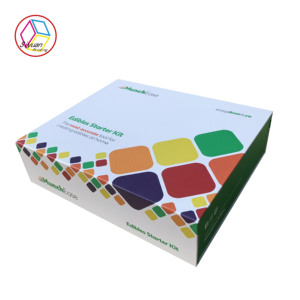

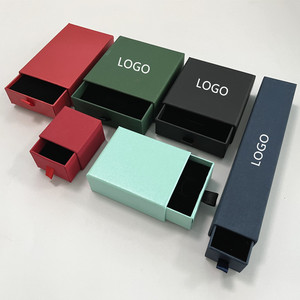
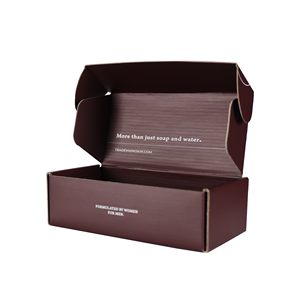
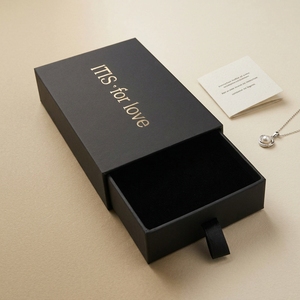

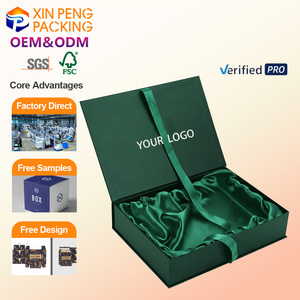
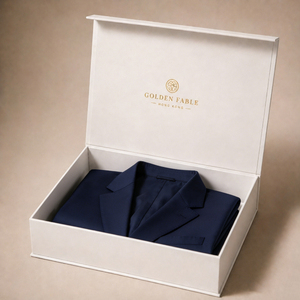
A comparative financial analysis based on 10,000 units exported from Shanghai/Ningbo Port to North American and European logistics centers.
| Evaluation Parameter | Traditional Setup Rigid Boxes | Advanced Collapsible Rigid Boxes | Strategic Advantage |
|---|---|---|---|
| CBM Volume (per 1,000 units) | Approx. 18.5 CBM | Approx. 3.8 CBM | 79.4% Space Reduction |
| Freight Cost (40ft HQ Container) | Fits ~2,200 Boxes | Fits ~11,500 Boxes | 5.2x Shipping Volume Efficiency |
| Warehouse Storage Footprint | Requires High Pallet Bay Overhead | Flat-Packed on standard pallets | Up to 80% Storage Savings |
| Structural Integrity & Rigidity | Fixed 2mm-3mm Greyboard | 2mm-3mm V-Groove Board + Magnets | Identical Premium Rigidity upon Assembly |
| Assembly Speed | 0 Seconds (Pre-assembled) | 3 to 5 Seconds (Self-Adhesive Corners) | Rapid In-Store / Fulfillment Setup |
| Carbon Footprint (CO2e / Unit) | High transportation emissions | Optimized transport footprint | Supports Enterprise ESG Commitments |
In the contemporary global retail and e-commerce landscape, premium packaging serves a dual imperative: it must function as an impactful tactile brand ambassador while simultaneously maintaining rigorous operational efficiency within international supply chains. For global enterprise procurement directors, supply chain managers, and packaging engineers, the strategic transition toward collapsible rigid packaging manufactured in China represents one of the most compelling cost-optimization and carbon-reduction opportunities available today.
Historically, luxury rigid boxes—renowned for their solid structural integrity, heavy greyboard cores, and opulent unboxing presentations—suffered from a massive operational vulnerability: high volumetric transport costs. Shipping pre-assembled setup boxes across ocean trade routes effectively meant paying thousands of dollars in ocean freight to transport trapped atmospheric air. China’s packaging innovation clusters, headquartered in Shanghai, Zhejiang, and Guangdong, have revolutionized this paradigm by perfecting the structural engineering of foldable magnetic rigid packaging.
By engineering precision V-groove scores into high-density recycled greyboard and embedding hidden N42 neodymium magnetic closures, Chinese manufacturers enable rigid boxes to ship completely flat. This reduces cubic volume by up to 80% while retaining 100% of the luxury aesthetic and structural strength upon assembly.
To understand why leading Global 2000 consumer brands are re-platforming their packaging lines to collapsible rigid formats, one must analyze the mechanical engineering under the hood. A premium collapsible box is not merely a folded carton; it is a hybrid structural system combining heavy-gauge rigid board with flexible paper hinged joints and magnetic locking mechanisms.
The foundation of any high-end collapsible packaging relies on rigid board substrates. Chinese manufacturers utilize premium greyboard, typically ranging from 1.5mm (1000 GSM) to 3.0mm (2000 GSM) in thickness. Unlike standard corrugated fluting which can crush under vertical load, solid greyboard is compressed recycled pulp fiber engineered for high flexural modulus and column strength.
The defining innovation in collapsible rigid architecture is computer-controlled CNC V-grooving. Standard die-cutting creates rounded score lines that bow and warp when folded. In contrast, V-slot cutting carves precise 90-degree or 120-degree channels into the interior face of the greyboard without penetrating the outer wrap paper. This allows the heavy rigid board to fold smoothly into crisp, razor-sharp 90-degree outer corners, creating a seamless box profile when popped open.
Collapsible rigid boxes rely on two primary structural assembly methods:
When evaluating China OEM packaging exporters, procurement decisions are fundamentally driven by Total Cost of Ownership (TCO). A superficial unit-price comparison between a foldable box and a traditional setup box often hides the massive downstream financial savings created by collapsible technology.
International ocean freight rates are calculated based on Weight or Measurement (W/M), with standard 40ft High Cube (40HQ) containers capping out at 76 cubic meters (CBM). A standard luxury rigid packaging run of 20,000 retail clothing boxes in a traditional pre-assembled format would occupy roughly 3 to 4 full 40HQ containers. By converting the exact same dimensional box into a flat-pack collapsible design, the entire 20,000-unit production run compresses into less than one single 20HQ container. The resultant freight savings frequently exceed $15,000 to $35,000 USD per shipping cycle.
3PL logistics facilities charge premium rates for pallet bay storage. Storing thousands of pre-assembled rigid gift boxes consumes extensive floor space, ballooning monthly holding costs. Collapsible boxes arrive packed in flat master cartons, maximizing pallet stacking density and freeing up critical fulfillment center square footage for revenue-generating inventory.
A primary concern among luxury creative directors is whether collapsible packaging can support high-end embellishments without cracking or flaking along the fold lines. China’s premier packaging factories utilize specialized elastic lamination films and flexible foil formulations engineered specifically for high-stress folding joints.
As regulatory compliance and consumer expectations evolve, the global packaging market is undergoing a structural paradigm shift. When sourcing collapsible packaging from Chinese suppliers over the next decade, enterprise buyers must align with three macro trends:
The European Union Packaging and Packaging Waste Regulation (PPWR) and international extended producer responsibility (EPR) laws are mandating higher recyclability scores. Next-generation collapsible boxes are ditching plastic lamination in favor of bio-based water-based barrier coatings and replacing traditional EVA foam inserts with 100% recyclable molded paper pulp or die-cut corrugated paper platforms.
Advanced OEM exporters in Shanghai and Shenzhen are increasingly embedding ultra-thin RFID chips and serialized secure QR codes into the board assembly of collapsible luxury boxes. This enables enterprise clients to combat grey-market diversion, track real-time supply chain telemetry, and deliver interactive augmented reality (AR) consumer experiences directly from the packaging lid.
The era of 90-day lead times is coming to an end. China’s top packaging manufacturers are heavily investing in fully automated V-grooving lines and robotic magnetic insertion stations. This automation allows for zero-MOQ prototyping, rapid 7-day sample turnaround, and scalable production runs that can flex dynamically with seasonal e-commerce demand spikes.
We combine decades of structural packaging engineering with modern automated factory lines to serve global enterprise clients seamlessly.
We empower emerging D2C brands and global market trials by offering ultra-flexible production runs. Test new product launches without committing to massive inventory capital upfront.
Eliminate artwork placement errors before full production. Our in-house structural engineering team provides complimentary CAD dielines, digital mockups, and physical pre-production samples.
Full DDP (Delivered Duty Paid), FOB Shanghai/Ningbo, and CIF logistics capabilities. We handle customs clearing, port documentation, and direct delivery straight to your fulfillment centers worldwide.
Everything you need to know about custom specifications, sampling timelines, material integrity, and bulk OEM pricing.
Connect directly with our senior structural engineers in China. Receive instant factory-direct pricing, complimentary dielines, and expert guidance on custom collapsible packaging solutions.
