Technical Whitepaper: OEM Kraft Packaging Manufacturing Standards & Procurement Blueprint
In the modern international supply chain, paper packaging has evolved far beyond simple product containment. For procurement executives, brand managers, and B2B importers, custom Kraft paperboard and rigid structural boxes represent a critical balance between carbon footprint reduction, transit survivability, and sensory brand positioning. As global regulations like the European Union’s Packaging and Packaging Waste Regulation (PPWR) and US Extended Producer Responsibility (EPR) laws tighten, selecting a qualified OEM (Original Equipment Manufacturer) Kraft packaging factory becomes a paramount strategic decision.
Information Gain Insight: Unlike standard folding cartons, unbleached sulphate Kraft paper maintains a superior tear resistance and burst index due to its long natural wood fibers. When paired with high-density greyboard cores (1.5mm to 3.0mm), Kraft packaging delivers up to 40% greater compression resistance under humid maritime shipping conditions compared to standard recycled paperboards.
1. Material Science & Paperboard Classification
Understanding the underlying substrate mechanics is critical to optimizing cost versus protective integrity. In OEM manufacturing, Kraft paperboard solutions are systematically classified based on pulping methodology, tensile strength, bursting factor, and surface treatability:
- Unbleached Virgin Kraft Paper (Kraftliner): Manufactured using the chemical sulphate pulping process. Features long virgin wood fibers delivering maximum Mullen Burst Strength (ranging from 250 to 600 kPa) and superior Edge Crush Test (ECT) ratings. Ideal for heavy-duty e-commerce mailers and outer structural wraps.
- Testliner (Recycled Kraft Outer Layer): Composed of multi-ply recycled fibers with a virgin Kraft top layer. Offers a highly cost-effective substrate for inner gift box wraps while maintaining acceptable printability for flexographic and offset inks.
- Solid Bleached Sulfate (SBS) Kraft: Premium white Kraft paper refined for ultra-high-definition CMYK color fidelity, spot UV finishes, and luxury debossing while retaining structural durability.
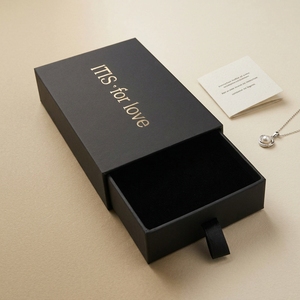
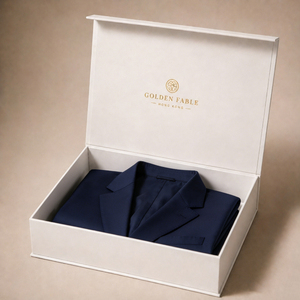
- Rigid Chipboard / Greyboard Core: Dense paperboard core ranging from 600 gsm to 1800 gsm (1.0mm to 3.0mm thickness), wrapped with customized Kraft paper sheets to build non-collapsible luxury rigid gift boxes and magnetic closure packaging.
| Paper Substrate Grade |
Grammage Range (GSM) |
Burst Index (kPa·m²/g) |
Primary Application Field |
Recyclability Rating |
| Virgin Unbleached Kraft |
120 - 450 gsm |
3.5 - 4.8 |
Heavy Shipping Mailers, Structural Wraps |
100% Biodegradable |
| Recycled Testliner Kraft |
140 - 300 gsm |
2.2 - 3.1 |
Retail Packaging, Inner Folding Cartons |
100% Recyclable |
| Rigid Greyboard (Composite Core) |
800 - 1800 gsm |
N/A (Rigid Structural) |
Luxury Gift Boxes, Cosmetic Packaging |
100% Recyclable Core |
| Bleached Craft (SBS Base) |
180 - 400 gsm |
3.0 - 3.9 |
High-End Cosmetics, Jewelry Gift Packaging |
100% Recyclable |
Future Procurement Trends in OEM Kraft Packaging (2025–2030)
As corporate sustainability objectives shift from passive compliance to active competitive differentiation, global procurement managers are adopting sophisticated sourcing strategies. Based on global trade data and packaging research, the following four macro trends are defining the future of OEM Kraft manufacturing:
Trend A: Transition to Mono-Material Construction
Multi-material packaging—such as paper boxes bonded with non-separable plastic films or synthetic foil laminates—faces mounting penalties under new global waste-management tariffs. The market is aggressively shifting toward mono-material paper constructions. Modern OEM manufacturers achieve water-resistant and oil-barrier properties by applying aqueous bio-coatings directly onto Kraft paper fibers, eliminating PE/PET lamination entirely while ensuring standard pulper recyclability.
Trend B: Structural Volumetric Optimization & Freight Reduction
With ocean freight and air cargo charges subject to volatility, reducing dimensional weight (DIM weight) is a primary priority. OEM manufacturers are redesigning traditional rigid set-up boxes into flat-pack collapsible magnetic Kraft boxes. By shipping rigid boxes in a knocked-down flat state, brands can pack up to 400% more units per pallet, slashing inbound logistics expenditures and overseas container emissions.
Trend C: Digitalized Proofing & CAD Precision Dielines
The traditional 6-week OEM sampling cycle is being replaced by real-time CAD structural design and 3D digital rendering. Smart factories leverage automated sample plotters to produce physical structural prototypes within 24 hours, guaranteeing zero dieline variance during final mass die-cutting.
Trend D: Smart Packaging & Digital Integration
High-value products packaged in Kraft rigid boxes increasingly incorporate embedded invisible QR codes, NFC tags, or anti-counterfeiting micro-prints directly onto the unbleached Kraft surface using eco-friendly soy-based inks. This empowers brands to track supply chain custody while engaging D2C consumers via interactive mobile unboxing experiences.
Manufacturing Process & Quality Control Standards
Consistently manufacturing premium OEM Kraft packaging requires precise control over humidity, tension, cut accuracy, and adhesive performance. Our factory enforces a closed-loop quality assurance process across five production stages:
- Substrate Moisture Calibration: Raw Kraft paper reels are stored in climate-controlled environments kept at 50-60% relative humidity to prevent warp, paper curling, or brittle cracking during fold creasing.
- Precision Printing & Finishing: Equipped with Heidelberg 6-color offset presses and automated UV coaters. Spot UV, gold foil stamping, and debossing are executed with registered optical sensors targeting a margin of error under 0.1mm.
- Automated Die-Cutting & Creasing: High-hardness Swiss steel dies stamp clean edges without fiber fraying, ensuring crisp 90-degree fold lines across corrugated and rigid board structures.
- Eco-Adhesive Lamination: Water-based jelly glues and hot-melt adhesives with zero VOC emissions are applied via robotic gluing arms to assemble drawers, rigid box shells, and magnetic closure flaps.
- Drop & Compression Testing: Finished batch samples undergo ISTA 1A transit testing, including free-fall drop tests, vibration table tests, and stack compression tests up to 500 kg force.
Quality Assurance Standard: Every custom OEM production run is audited under ISO 2859-1 AQL Level II sampling standards, ensuring an Acceptance Quality Limit of 0.65 for major defects and 1.5 for minor visual variations.
✔
What is the difference between standard folding cardboard and rigid Kraft boxes?
Standard folding cardboard cartons are made from single-layer paperboard (typically 300 to 400 gsm) shipped flat and folded into shape upon assembly. Rigid Kraft boxes utilize a heavy, non-bending greyboard or chipboard core (1.5mm to 3.0mm thickness) wrapped in printed Kraft paper. Rigid boxes do not collapse (unless specifically designed as a collapsible magnetic structure) and provide superior protection and luxury brand positioning.
✔
How do unbleached Kraft boxes compare in terms of eco-compliance and food contact safety?
Unbleached natural Kraft paper is free from chlorine gas residues and optical brighteners, making it one of the most environmentally friendly substrates available. When paired with FDA-compliant food-grade water coatings or grease-resistant barrier coatings, virgin Kraft packaging is safe for direct food contact in bakery and confectionery packaging.
✔
Can OEM Kraft packaging support custom inserts for fragile goods like cosmetics or glass containers?
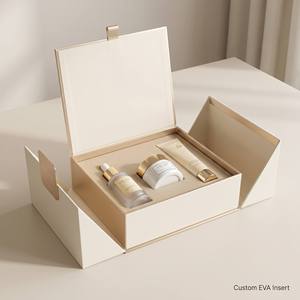
Yes. We manufacture customized internal fitments engineered specifically for product dimensions. Insert options include high-density EVA foam, velvet-flocked plastic trays, molded pulp fitments, and eco-friendly die-cut corrugated paperboard partitions that match the box’s exterior finish.
✔
What are the typical lead times for custom OEM prototype sampling and mass production?
Digital structural dielines and 3D mockups are generated within 24 hours. Physical structural prototypes require 3 to 5 business days upon dieline approval. Full OEM mass production typically spans 12 to 18 business days, depending on custom finishing complexity (e.g., foil stamping, debossing, magnetic assembly) and volume metrics.
✔
What artwork dieline formats are required, and how is color accuracy ensured on brown Kraft substrates?
We require vector artwork files in Adobe Illustrator (.AI), PDF, or EPS formats with fonts outlined and CMYK/Pantone spot colors designated. Because brown Kraft paper absorbs light differently than white coated paper, we utilize a white ink underprint base layer or spot Pantone ink formulations to ensure exact color fidelity matching Delta-E < 1.5 standards.
✔
How do you optimize bulk packaging shipping costs for international sea freight?
We offer structural engineering optimizations such as collapsible rigid box designs that ship flat. Additionally, our logistics team calculates optimal master carton sizes and pallet utilization rates to maximize container load capacity (20GP, 40GP, 40HQ), reducing per-unit landed freight costs.