Engineered for commercial bakeries, luxury confectioners, and global food exporters requiring food-grade certification, structural integrity, and brand distinction.
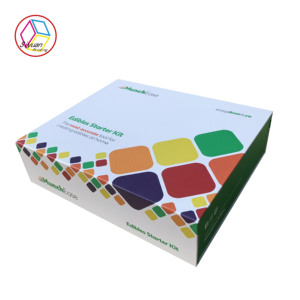
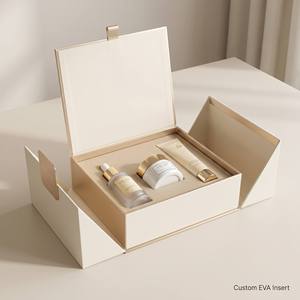
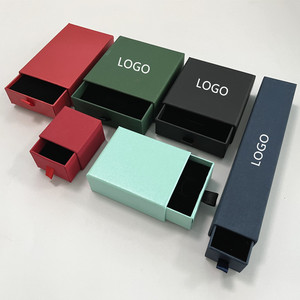
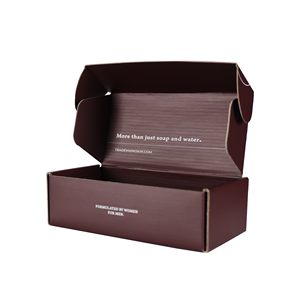

From structural engineering dielines to dust-free manufacturing lines, we ensure enterprise buyers experience unmatched reliability and compliance.
Our manufacturing plant strictly operates under dust-free cleanroom environments certified to BRCGS Grade A, ISO 22000, and FDA food-contact standards for complete safety.
In-house structural engineering team provides 24-hour dieline delivery and 3D digital mockups, alongside 3-day rapid physical sample production prior to mass runs.
100% FSC-certified virgin kraft boards, plant-based soy inks, bio-degradable PLA windowing films, and water-based barrier coatings ensuring full circular economy compliance.
Heidelberg 10-color offset presses featuring automated closed-loop spectrophotometer systems guarantee ΔE < 1.5 color consistency across multi-country production lots.
Turnkey export management delivering directly to North America, Europe, Australia, and the Middle East via sea, air, or rail with full customs clearance and DDP options.
Direct OEM factory pricing with low MOQ flexibility for seasonal boutique launches, scaling seamlessly up to multi-container shipments for commercial retail chains.
In the rapidly evolving global food and confectionery industry, packaging is no longer merely a passive vehicle for transportation; it serves as a critical guardian of freshness, an enabler of supply chain efficiency, and the primary touchpoint for brand equity. As an established OEM/ODM Bakery Packaging Manufacturer & Exporters, our operations bridge the gap between heavy structural engineering and consumer-facing aesthetic perfection. This whitepaper provides procurement directors, brand owners, and packaging engineers with a technical analysis of material selection, food-grade compliance, barrier technologies, and sustainable manufacturing methodologies.
Designing bakery packaging requires balancing weight-load resistance, humidity tolerance, and food-contact compliance. Unlike generic retail boxes, bakery products emit moisture vapor, oil, and heat during post-baking assembly. Consequently, substrate selection dictates structural stability:
| Substrate Material | Grammage / Thickness | Primary Technical Attribute | Optimal Bakery Application |
|---|---|---|---|
| Virgin SBS Board | 250 GSM - 450 GSM | High Whiteness, Smooth Surface | Cupcake Boxes, Pastry Sleeves, Macaron Boxes |
| Natural Unbleached Kraft | 300 GSM - 500 GSM | High Tear Resistance, Recyclable | Artisanal Bread Boxes, Donut Cartons |
| Rigid Greyboard (Wrapped) | 1.5mm - 3.0mm Thickness | Crush-Proof Structural Rigidity | Luxury Gift Boxes, Mooncakes, Premium Chocolates |
| Micro-Corrugated (E/F Flute) | 1.2mm - 2.0mm Thickness | Stacking Strength & Thermal Insulation | Heavy Tiered Cakes, Catering Delivery Boxes |
One of the primary challenges in bakery packaging export is oil bleed-through and grease staining caused by high butter, lard, or vegetable oil content. Traditional polyethylene (PE) laminations, while effective, present challenges for post-consumer recycling. Modern OEM/ODM manufacturing utilizes advanced barrier technologies:
Water-Based Dispersion Coatings (WBDC): Aqueous polymer dispersions applied during paperboard manufacture create a hydrophobic and oleophobic layer. WBDC coatings allow the box to be repulped in standard paper recycling facilities without special chemical treatment.
Bio-Polymer Linings (PLA & PHA): Polylactic Acid (PLA) derived from cornstarch provides an effective oil barrier for clear window display applications. PLA films offer identical optical clarity to standard PET while breaking down under industrial composting conditions.
Fluorocarbon-Free Grease Barrier Papers: Complying with strict European REACH regulations and US FDA guidelines prohibiting PFAS chemicals, our grease-resistant formulations achieve Kit Test Values ranging from Kit 6 to Kit 12 without synthetic fluorochemicals.
Procurement executives operating in global supply chains must align their sourcing strategies with emerging regulatory standards and consumer shifting behaviors. As a leading manufacturer, we track key structural shifts impacting global orders:
Regulatory bodies, particularly in the European Union (PPWR directive), are penalizing multi-material composite packages that cannot be easily separated. Future bakery box procurement focuses heavily on mono-material constructions—eliminating plastic window films or replacing them with paper-thin translucent glassine windows or die-cut open lattices.
Warehouse storage costs and international container shipping rates have made pre-assembled rigid boxes cost-prohibitive for large-scale export. The industry is rapidly adopting Collapsible Magnetic Rigid Boxes. These structures ship 100% flat, reducing freight volume by up to 80%, while assembling in seconds at the retail store via concealed self-adhesive strips or magnetic corners.
High-end confectioners are incorporating serialized Data Matrix codes, NFC chips, and temperature-indicating inks onto bakery shipping containers. This enables cold-chain tracking for frozen dough exports and guarantees product authenticity for luxury food gift brands.
The global bakery packaging market is projected to expand significantly, driven by the expansion of direct-to-consumer (D2C) food delivery networks, high-end pastry gifting, and rapid retail coffee-bakery chain expansion. Strategic market dynamics include:
Our ODM/OEM manufacturing protocol follows a rigorous 6-stage engineering process designed to eliminate errors prior to mass production:
Answers to critical technical, compliance, and logistics questions regarding OEM/ODM bakery packaging orders.
Contact our engineering team today to request instant factory quotes, structural dielines, or physical sample kits for your enterprise procurement needs.
